What Is Gum Bleaching?

Patient after gum bleaching procedure Gramercy park
The first thing that springs to mind when people jump into the topic of what makes a beautiful and healthy smile is pearly white teeth. What’s often left out of the conversation are the gums. They are the unsung heroes of your mouth because a beautiful smile is impossible to achieve without them. You can accomplish beautiful smiles and gums with quality gum bleaching in Gramercy Park.   Gums that are discolored might affect the appearance of your smile and lower your self-esteem. If your gums make you hesitant to flash your smile, you should think about gum bleaching, otherwise known as gum whitening or gum depigmentation.   Gum bleaching diagram Gramercy park

All About Gum Bleaching

What Is It?

This procedure is called many names, such as gum whitening, gum lightening, dark gum treatment, and gum depigmentation. But, no matter what it’s called, the vital fact to remember is that this is a quick and comparatively painless one that’ll give you results worth every penny.   A soft tissue laser is used during the operation. When your gum tissue’s brown or black spots are exposed to the laser, they will disappear. Although many patients undergo this procedure to lighten their black gums, some still do so to have evenly pink gums across their mouths.  

Is Gum Bleaching Painful?

As stated earlier, gum lightening is comparatively painless. You won’t feel much pain throughout the non-invasive gum bleaching technique. Even though you may experience minor soreness, it’s only natural as your gums need to adjust. Soon after the surgery, you can experience transient gum sensitivity.  

What Should I Do if I Have Black Gums?

You may have black, bright red, or patchwork gums for various causes. Discoloration may be brought on by:  
  • A lack of care and poor dental hygiene – The best way to enhance oral health, lower the chance of illness, and avoid staining is to brush your teeth twice a day and floss afterward.  
  • Medication – Some medications are linked to gum discoloration. Patches of dark gum pigmentation can be targeted with gum bleaching or whitening, although discoloration may return if you keep taking the same medications after treatment. 
  • Lifestyle choices: Smoking and chewing tobacco are common factors that increase your risk of developing stained gums. 
  • Ethnicity: Some people are more prone than others to have darker or patchier gums because of their race.  

Is Gum Bleaching Safe?  

The gum bleaching procedure is non-invasive and safe. The black tissue on the surface of your mouth is softly removed using a microdermabrasion procedure or laser technology while you are sedated. Aside from the fact that it’s a safe procedure, another good thing about this treatment is that the outcome can be achieved on the same day.  

Are There Negative Effects?

Your gums will notice the effects of gum bleaching immediately, and there won’t be any adverse side effects. After the bleaching operation, you may experience temporary mild sensitivity but no severe pain or discomfort. Following gum whitening, patients can immediately eat and speak normally.  

How Long Does the Gum-Whitening Procedure Last?

It takes about 45 minutes to bleach your gums. However, depending on the local anesthetic, you may have to wait a little while before the treatment begins. Dark gums may usually be removed in less than an hour, though.   Woman smiling after gum bleaching procedure Gramercy park

How Long Do the Results of Gum Bleaching in Gramercy Park Last?  

The gum bleaching process takes less than an hour. However, the consequences of the operation linger quite a while, especially for situations brought on by external factors like smoking.    Although some gums will retain their beautiful pink shade for 20–25 years, the results are typically long-lasting. Indeed, this treatment allows you to enjoy your pink gums that appear healthy for the rest of your life. Please schedule an appointment with us to get this treatment. 

Are There Restrictions on Getting Teeth Whitening?

Restrictions on getting teeth whitening

Are you interested in teeth whitening? The inside information is right here. Discover the different alternatives to cosmetic dentistry in Murray Hill. In this article, you’ll learn how teeth whitening works, the process used to whiten teeth effectively, and if anyone can get their teeth whitened. 

Woman after cosmetic dentistry Murray Hill

Teeth Whitening Q and A’s

Who Makes the Best Teeth Whitening Candidates?

Suitable candidates for professional teeth whitening are those with healthy gums and teeth free of fillings or other restorations. Patients who have yellow teeth are more likely to benefit from treatment. 

Do All Teeth Whitening Procedures Work? 

Unfortunately, not everyone can benefit from whitening. For instance, whitening usually helps with yellow discoloration. However, over-the-counter whitening treatments may not effectively work on teeth with brown or gray tones. 

Additionally, whitening won’t help if the discoloration is brought on by medications or an accident. Finally, patients with dental caps, veneers, crowns, and fillings are not good candidates for tooth whitening. 

What Teeth Whitening Options Do I Have?

If you want to whiten your teeth, you have a variety of options to choose from. 

  • In-Office Teeth Whitening 

The most pleasing results come from professional in-office whitening, which often whitens teeth by around eight shades. Professional teeth whitening is more expensive than other options, but the benefits are more noticeable and immediate. This process is also safer than bleaching at home because the whitening is done by a professional. 

  • At-Home 

This includes whitening toothpaste, teeth-whitening strips, and whitening-solution-filled mouth trays. All of these at-home bleaching techniques have benefits, but they also have some downsides.  

One drawback is that it takes time to see results, and those effects are less dramatic than those you may get from professional whitening. Additionally, those with sensitive gums or teeth shouldn’t use these techniques because they will only create more harm than good. 

  • Bleaching Toothpaste 

Chemicals are used in whitening toothpaste to brighten teeth. However, these toothpastes usually brighten teeth by a shade or two. Hence, the most subtle outcomes are provided by this type. 

What Causes Yellow Teeth?

There are several reasons why people get yellow teeth. The most frequent causes are: 

  • Early tetracycline antibiotic exposure 
  • Excessive fluoride intake  
  • Inadequate dental care 
  • Aging 
  • Trauma 
  • Drinking dark beverages like red wine, tea, coffee, and cola 
  • Smoking 

Most people don’t think about how becoming older changes the shade of their teeth. The enamel makes up the outer layer of your teeth. Dentin, a yellow tissue layer, lies beneath it. Studies show that enamel starts to erode with age. When this occurs, the dentin peeks through, and the teeth seem yellow.

What Are the Obstacles to Effective Teeth Whitening?

Special considerations are required if your mouth contains fillings or other materials. Your natural teeth and inorganic restorations may not match after tooth whitening since crowns, bridges, and other inorganic restorations are resistant to the effects of the process.  

If inconsistent color is going to be an issue, your dentist may be able to devise a plan to provide more reliable results. New fillings or other repairs can be necessary for specific circumstances. Even if teeth whitening is not an option, your dentist can still help you achieve the perfect smile with veneers or bonding. 

Patient receiving cosmetic dentistry Murray Hill

Know More About Cosmetic Dentistry in Murray Hill

Since teeth tend to be yellow with age, very few people have naturally white teeth. However, good oral hygiene and routine dental exams can help keep the teeth white. 

Although yellow teeth are not usually a symptom of health issues, a dentist can check for tooth decay and enamel loss. If you want to arrange professional teeth whitening or other treatments, please schedule your dental appointment. 

Effects of Each Type of Sedation

Sedation Dentistry in NYC form
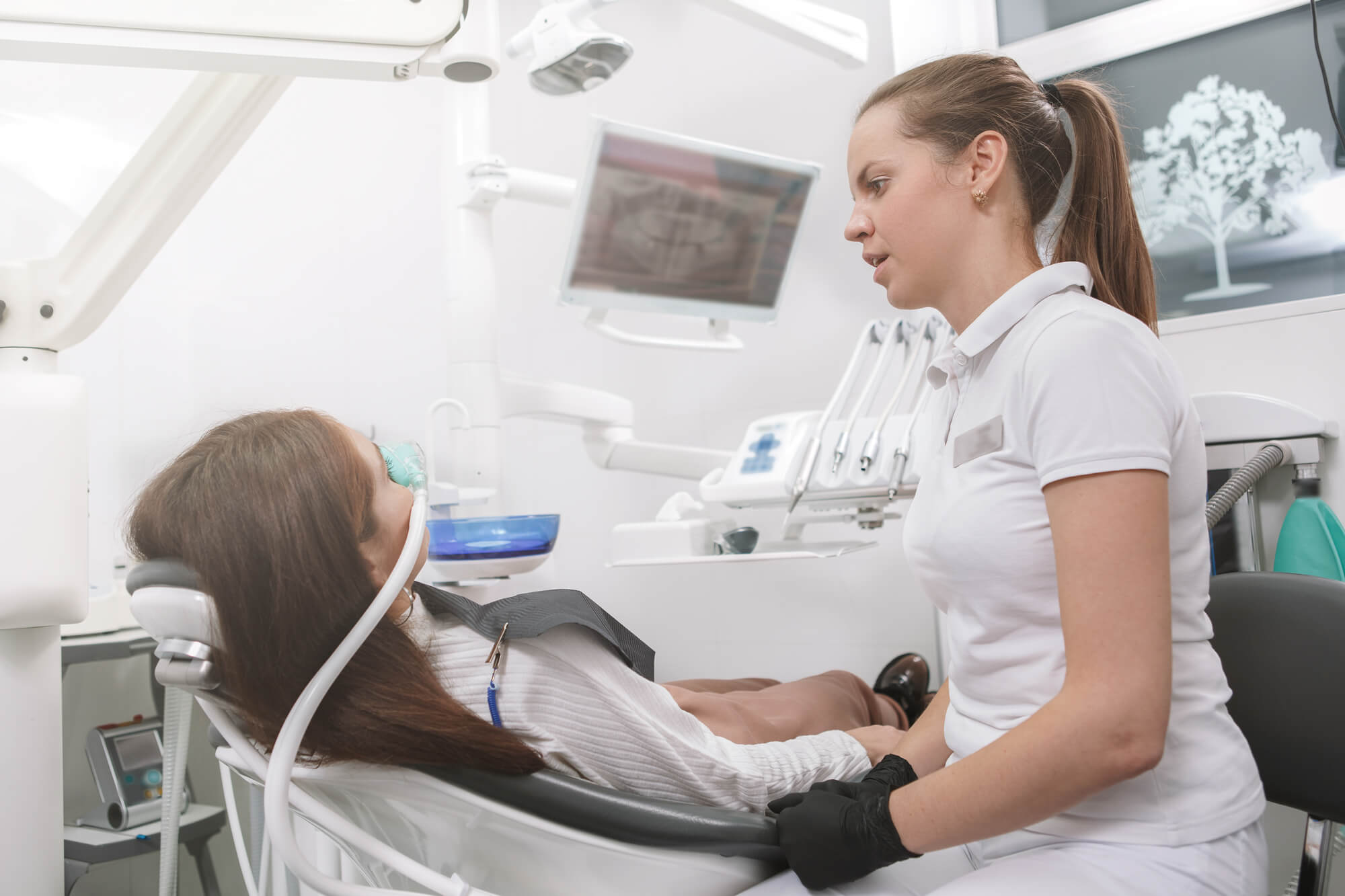
A high percentage of individuals are frightened of seeing the dentist and find it nauseating to consider having dental work done. Fortunately, sedation dentistry in NYC allows dentists to offer their patients quality treatment while feeling relaxed and at ease in the dental chair.  inhalation Sedation Dentistry in NYC Sedation Types and Their Effects
Inhaled Minimal Sedation For this type of sedation, nitrous oxide (often known as “laughing gas“) is inhaled through a mask. While the dentist performs the operation, nitrous oxide helps the patient calm down. The advantage of nitrous oxide is that it wears off relatively fast, allowing patients to leave the dental office unassisted and on their own.  Oral Sedation The simplest form of sedation is oral. Your dentist will suggest that you take an oral sedative so you can relax. All you have to do is take a tablet about an hour before your appointment, and you’ll feel calm when you get there.   Depending on the amount, oral sedation can either make you sleepy or make you drowsy. It results in drowsiness that lasts longer and is stronger than nitrous oxide.    Halcion is a regular oral sedative (triazolam), and this can be straightforward to use. Aside from the fact that it’s taken orally, this type of sedation involves no needles. Many people who fear going to the dentist also fear using needles, which are necessary to deliver IV sedation. Instead of worrying about being poked by the dentist, the patient can take the sedative orally before the appointment.   IV Moderate Sedation IV moderate sedation is administered intravenously (IV) into the patient’s veins. The drug can start working more quickly with this administration strategy. Because dentists can control the dose of sedation throughout the process, it’s a good sedative for lengthy procedures.    Long-lasting drowsiness, dizziness, headaches, visual abnormalities, forgetfulness, and nausea may be side effects of anesthetic or sedative medicines. Although uncommon, nausea and vomiting are possible adverse effects. For relief, bed rest and prescribed medications may be necessary.   General Anesthesia Patients who receive deep sedation or general anesthesia are practically asleep the entire time. Deep sedation results in unconsciousness, in contrast to oral sedation or mild IV sedation, which induces patients to be drowsy but keeps them awake.    Deep sedation has the longest-lasting effects, and patients must wait for the effects to wear off before they can go home.   Which Is the Best for You? The right sedative for you will depend on a few things, such as:  
  • Type of Treatment  
First, the kind of dental operation you have will determine the anesthesia you will get. You may do well with nitrous oxide if you have a tooth extracted because the process takes only a short time, and the sedative’s effects subside quite rapidly.    Deep sedation may be required to ensure that you are entirely comfortable throughout the process if you have substantial dental work done.  
  • Level of Comfort  
Depending on your comfort level throughout the treatment, your dentist may suggest a specific type of anesthesia. A more potent sedative may be administered to ensure you are comfortable. Your fears or concerns should be discussed with your dentist before the procedure.    patient receiving Sedation Dentistry in NYC Learn More About Sedation Dentistry in NYC If you want dental treatment completed by a professional who is not only highly skilled but also concerned with your comfort while you’re there, choosing Coliseum Dental is your best bet.  

What You Need to Know About Laser Dentistry 

tools for Laser Dentistry in Murray Hill 

Movies have influenced how we perceive lasers. They are frequently depicted as blazing, impenetrable beams of light. This is why some people are wary about subjecting themselves to laser dentistry in Murray Hill.    

Because of advanced technology, people gradually believe laser dentistry to be less painful or more effective than conventional techniques. With the help of lasers, dentists can now perform numerous treatments with greater accuracy.  

woman receiving Laser Dentistry in Murray Hill 

Laser Dentistry 101  


What Is It?  


Dentists use laser equipment to center a focused beam of light that reacts to specific tissue. Different wavelengths are produced by each laser device to target various tissues. For instance, while hard tissue lasers target hard tissue like teeth and bone, soft tissue lasers target soft tissue like the gums.  


What Are the Types of Laser Dentistry?  


Soft Tissue Lasers  


Water and hemoglobin can easily absorb soft tissue lasers’ wavelength. They are used to cut into soft tissues and seal the blood vessels punctured. Likewise, soft tissue lasers are mainly operated to address restricted tongue movement, lengthen crowns for cosmetic reasons, and reshape gums.  


The advantages of using soft tissue laser are as follows:  


  • The hard tissues won’t be affected by the treatment.  
  • The dental pulp will not be harmed by laser therapy.  
  • The patient will only undergo a small amount of local anesthetic, but most patients prefer to be sedated.  
  • Diode lasers can be used safely near dental implants.  
  • Additionally, they’re harmless around PFM, full-metal crowns, gold alloys, and amalgam fillings.  
  • Dental lasers offer superior hemostasis.  
  • With the pen-style holder, soft tissue removal is accurate and predictable, and there’s good visibility.  
  • For patients with particular needs or those who are young, it may not be necessary to use stitches or periodontal packs.  

Hard Tissue Lasers  


Teeth are made of hard tissues. With the help of a dental laser, you can identify early indications of tooth decay and start taking preventative measures to save the tooth. By eliminating the microorganisms present in the cavity, a dental laser can be utilized to treat cavities. Moreover, a dentist can remove the decaying portions using a laser rather than a drill, making it a minimally invasive filling method.   


The laser’s primary function is to precisely cut the teeth. It can precisely slice into the teeth and bones. When cutting the tooth structure, this laser treatment works perfectly. Moreover, the lasers also include erbium YAG (Yttrium Aluminum Garnet) and erbium chromium YSGG (Yttrium Scandium Gallium Garnet).  


In order to prepare or shape the teeth for composite bonding, hard tissue laser is also helpful. Small tooth structures can be removed with assistance, and dental tear fillings can heal more quickly.   

a female patient receiving Laser Dentistry in Murray Hill 

Ready to Get Laser Dentistry in Murray Hill?  

At Coliseum Dental, we treat periodontal disease and offer high-quality deep cleanings using laser technology. The use of laser technology also makes it possible to execute a variety of soft tissue treatments with less discomfort, better outcomes, and a quicker recovery time, making this treatment option a favorite among patients.   

We can’t wait to hear from you! Contact our staff or dental professionals right away if you’re interested in learning more about how laser dentistry can help you with your dental issues.   

Can Anyone Have Their Teeth Whitened?

woman shows off teeth because of cosmetic dentistry in Times Square

Everyone wants to smile without hesitation, and there are many different ways to do this. It may be helpful to know that there are just two types of teeth whitening treatments to select from – professional, in-office bleaching or at-home treatments. Often, the choices can be perplexing, especially when it comes to cosmetic dentistry in Times Square.   

No matter which teeth whitening option you select, both will include bleaching agents with peroxide content. While professional, in-office treatment solutions contain 15 to 43 percent peroxide, at-home remedies often only have 3 to 20 percent carbamide or hydrogen peroxides.  

When done correctly, bleaching aging and yellow teeth can be advantageous for many people, but is it advantageous for everyone?  

whitened teeth because of cosmetic dentistry in Times Square

Age Restrictions and Teeth Whitening Factors  

How Old Do You Have to Be to Get Teeth Whitening Done Professionally?  

Numerous dentists advise against having youngsters get professional teeth whitening until after their permanent teeth have fully emerged. Most dental offices even require the patient to be at least 16 years old and accompanied by a parent before beginning treatment. 

Teeth whitening can be done at any stage of maturity. Products for teeth whitening remove embedded stains and brighten the enamel. They offer simple, low-cost remedies to the issue of yellow or stained teeth.  

Teeth Whitening Methods  

  • Whitening trays  

You can buy bleaching trays from a dentist or from a store. These bleaching trays, as opposed to bleaching toothpaste, contain a form of hydrogen peroxide that is highly concentrated. It is advised that you purchase your bleaching trays from your dentist because those trays can be created in a lab and specially tailored to fit your mouth. This is a quicker method of teeth whitening for stained teeth.  

  • Whitening Toothpaste  

Using bleaching trays or whitening toothpaste can help you whiten yellowed teeth. Most whitening toothpaste brands contain low-concentration bleach, which is not harmful to your teeth. This strategy can be effective, but it takes a while before you notice a difference in the color of your teeth.  

cosmetic dentistry in Times Square compares teeth
  • Whitening Rinses  

Like most mouthwashes, whitening rinses also include compounds like hydrogen peroxide that whiten teeth and eliminate dental plaque and gum disease and improve breath.   

Due to the fact that rinses only have daily contact with the teeth for two minutes as opposed to 30 minutes for strips, and those benefits can take up to 12 weeks to manifest, they are less effective than other over-the-counter whitening solutions.  

  • Whitening Strips  

Whitening strips are applied for 30 minutes. They are coated with a peroxide-based whitening gel, and the recommended continuous use is at least 14 days for it to be effective. The results may be akin to what whitening toothpaste does. However, this can be observed after four to five months of usage.  

patient points at white teeth due to cosmetic dentistry in Times Square

Looking for Professional Cosmetic Dentistry in Times Square?  

If you have any questions about teeth whitening or any treatment covered by cosmetic dentistry, please give us a call! We are always happy to answer any questions or concerns you have about treatment. A professional whitening can brighten your smile by numerous shades. 

Perks of Having Same-day Crowns

3D model of teeth with same-day crowns in Murray Hill

Same-day crowns in Murray Hill, can be created in less than two hours and are nearly equivalent to conventional crowns. On the other hand, the latter is made off-site in a dental laboratory and may take roughly two weeks to complete. 

computerized image of same-day crowns in Murray Hill

Process and Advantages of Same-Day Crowns 

What Are the Processes Involved?  

Same-day crowns are made in-office using computer technology. The procedure starts immediately after the teeth have been reshaped, prepped, and cleaned. First, the dentist makes a personalized digital impression of your teeth using a computer (known as a CAD/CAM system).  

The impression is then sent to a dental milling device, which is used to cut a crown from a block of ceramic. A tooth can be transformed from being decayed or damaged to totally healed and functional in less than two hours and in just one session. 

What Are the Advantages It Can Offer? 

Beyond the shortened duration, these unique crowns have the following benefits to offer. 

  • Keeps the natural tooth below safe and secure. 

Both conventional and same-day crowns are optimized to safeguard the underlying natural tooth from decay and injury. However, the latter option does not require a temporary crown because same-day crowns are permanent straight away. Also, the tooth is not as well protected by temporary crowns as it is by a permanent one. 

  • Greater comfort 

Same-day crowns enable a more secure fit. As mentioned earlier, they do away with the requirement for temporary crowns. Insertion and removal of temporary crowns can make the treated tooth even more sensitive

computerized image of same-day crowns in Murray Hill
  • Cost-effective 

Even if the price of traditional and same-day crowns is a bit similar, the latter is less expensive in the long run. By placing the permanent crown during the same session, the patient avoids paying for both the temporary crown and the second visit. Additionally, because of their improved fit, these crowns will last for several years compared to conventional ones. 

  • Quicker turnaround 

The days of waiting weeks to receive a new crown are long gone. Traditional crowns require the patient to leave the office with a temporary crown after the initial appointment. Same-day crowns, on the other hand, allow the patient to leave the office with a permanent crown after one appointment. 

  • More natural look 

The sophisticated method that enables same-day crown creation also results in a more realistic-looking crown. Even the tiniest pits and variations in tooth shape can be recorded by the CAD/CAM system. A computerized system enables a tighter fit and a more realistic look and feel. 

As for the conventional crowns, the tooth can only be roughly estimated using a physical impression. It’s not as accurate as when your dentist will use the CAD/CAM system. 

patient about to get same-day crowns in Murray Hill

When Are Same-Day Crowns in Murray Hill Required? 

Same-day dental crowns can be your best choice for a fully restored and functional smile. Our team is also ready to hear and answer any questions you might have. Make an appointment at Coliseum Dental to get your tooth repaired. Call us to restore your teeth in just one short visit! 

Best Food for Your Teeth

happy patient smiles at dentist in Murray Hill

Brushing and flossing are only the beginning of proper dental hygiene. There are many beneficial habits to develop in order to keep your smile bright and beautiful, but don’t forget the tremendous cleansing capabilities of common meals. Below are the foods listed by a dentist in Murray Hill that are excellent for your teeth. These will aid in the development of healthy teeth and gums, as well as the prevention of tooth decay and gum disease. 

nuts not recommended by dentist in Murray Hill

Foods Highly Recommended by Dentists 

Chocolate 

Yes, you read that correctly. Chocolate! (If it contains at least 70% cacao and is consumed in moderation.) 

Dark chocolate is a superfood for your teeth because it contains a component called cocoa bean husk (CBH), which has been shown to help harden tooth enamel, reducing the risk of tooth decay. However, not all chocolate is beneficial to your health. The good thing is found in the cocoa bean, not the chocolate, so go for the dark chocolate and remember to brush your teeth afterward. 

It’s best to avoid chocolate with nuts if you have braces. It’s also a good idea to keep your chocolate sweets at room temperature rather than in the fridge, as cold, hard chocolate can be difficult to chew. 

Black and Green Teas 

Polyphenols, found in both green and black tea, interact with plaque-causing bacteria, killing or inhibiting them. Bacteria feed on the sugars in your mouth and then emit acidic acids that eat away at your tooth enamel. Also, tea is an excellent choice during or after a meal since it reduces the prevalence of acid-producing bacteria in the mouth. 

Onion 

While you may not enjoy biting into an onion, adding it to salads or stir fries might help strengthen your teeth. In reality, the humble onion helps eliminate harmful germs in the mouth and throughout the body, making it a true superfood. 

bag of vegetable carried by a dentist in Murray Hill

Celery 

Celery is a high-fiber vegetable that is worth mentioning when it comes to maintaining your dental health. With each delectable bite, this crunchy superfood effectively cleans your teeth. Because it needs aggressive chewing, it creates a lot of bacteria-fighting saliva, which is beneficial to your general oral health. 

Water 

The breakdown of food, neutralization of bacterial acid and prevention of dental decay all require optimal levels of water in your saliva. While water isn’t as effective as a toothbrush and floss in removing plaque, it can help by rinsing away food particles. After drinking coffee or eating highly pigmented meals, rinsing with water can help decrease tooth stains. 

Oranges 

Given that oranges are a citrus fruit, this one may come as a surprise. It contains vitamin C, which strengthens blood vessels and connective tissue and, by lowering inflammation, inhibits the onset of gum disease. 

Make oranges, grapefruits, and other citrus fruits a regular part in your fruit bowl. But, remember to wait at least half an hour after eating citrus fruits before cleaning your teeth since the acidic component may harm them. 

Vegetables and Fruits 

If you don’t have a toothbrush with you, don’t worry. Fruits and vegetables high in fiber are your next best bet. Their high fiber content ‘scrubs’ the teeth in the same way as a toothbrush does, and the extra chewing they require encourages saliva production

Salad greens are packed with nutrients, and the high-water content of crisp, juicy fruits and vegetables helps to balance out their sugar level. Keep fresh carrots, celery, cucumber, and apples on hand at all times because they’re sometimes referred to as “nature’s toothbrushes”. So, when you forgot to bring your toothbrush at a weekend getaway, getting high in fiber fruit or vegetable will do the trick. 

fruits recommended by a dentist in Murray Hill

Effective Dental Health Tips From a Dentist in Murray Hill 

At Coliseum Dental, we make sure that our tips are effective and practical. Schedule an appointment today to get in touch with our professionals. 

Why Dentists Use Laser Dentistry

patient undergoes laser dentistry in Hell's Kitchen

Keeping up with the most recent advancements in laser dentistry in Hell’s Kitchen? By knowing the latest advancements, you can be rest assured that you are receiving the most advanced dental care available.  

Dentists are continuously seeking new and improved approaches to provide superior dental care, which is why there are fresh and constant innovations in the dentistry sector. Because one of these advancements involves the use of a laser for dental treatments, contacting a laser dentist is strongly advised if you want to take advantage of these new technologies. 

patient in pain ready to avail laser dentistry in Hell's Kitchen

Laser Dentistry and How It Works 

What is Laser Dentistry? 

When a dentist utilizes a laser to treat a patient, this is referred to as laser dentistry. A dental laser treats oral problems with a very thin but intense beam of light energy. Because the laser essentially eliminates all heat, pressure, and vibrations, the dental patient will feel far less discomfort, if not none at all.  

For instance, when getting a cavity filled, employing a laser eliminates the need for anesthesia. When a dentist uses lasers during dental operations, they are utilizing one of the most cutting-edge and advanced dental technologies available today. Dental laser technology is not only extremely safe and effective, but it is also extremely adaptable, as it can be applied to a wide range of dental operations. 

When Is It Applicable? 

When it comes to laser dentistry, there are numerous applications, including but not limited to: 

  • Teeth whitening 
  • Getting rid of dental decay 
  • Gum reshaping – a procedure that involves restructuring the gums 
  • Providing relief from mouth sores 
  • Taking care of any gum tissue problems 
  • Aiding in the treatment of infections 
patient smiles because of the ease laser dentistry in Hell's Kitchen offers

What Are the Advantages? 

The main advantage of using a dental laser is that it is less invasive and, in most cases, causes less pain. Other benefits of laser dentistry include the following: 

  • Make it possible to avoid the use of anesthetic. 
  • Bleeding is reduced. 
  • Bacterial infections are reduced. 
  • Gum tissue in the surrounding area is less damaged. 
  • Stitches are not required as much. 
  • Everything tends to heal more quickly. 

What Conditions Can Laser Dentistry Help With? 

Despite the fact that laser dentistry may not be utilized in all dental operations, it can be used for many of them. If you have any of the following symptoms, laser dentistry may be a good option for you: 

  • Decaying Tooth 

If your tooth is badly decayed, your dentist can use lasers to hollow it out and remove all decayed substances. This treatment is frequently performed before normal cavity fillings to assist in the speeding up of the process. 

  • Periodontal Disease 

If you have gum disease, laser dentistry may also be a good option for you. Lasers are frequently used to eliminate bacteria from the gums, shape them, and prepare them for root canal treatments. 

  • Yellow Teeth 

Do you have a problem with your teeth turning brown or yellow? Do you want them to be as white as possible? Laser dentistry may be of assistance. During in-office teeth whitening procedures, lasers are frequently employed to speed up the whole process. They’re typically employed to activate the peroxide solution that’s put to your teeth. 

dental chair and laser dentistry in Hell's Kitchen

Know More About Laser Dentistry in Hell’s Kitchen 

Due to the numerous benefits that this modern dental technology may provide dental patients, laser dentistry is becoming increasingly popular. We encourage you to contact us as soon as possible because our skilled staff is always available to answer any laser-related queries you may have. 

If you believe you would benefit from the services of a laser dentist, now is the time to schedule an appointment to learn more

All About Restorative Dentistry

a patient needing Restorative dentistry in midtown Manhattan 

Any dental procedure used to repair the structure and functionality of your teeth is referred to as restorative dentistry. It may include a variety of treatment choices. To figure out if you need services involving restorative dentistry in Midtown Manhattan, you must first comprehend what these services entail.  

a woman needing Restorative dentistry in midtown Manhattan 

Restorative Dentistry: Its Procedures and Benefits 

What Is Restorative Dentistry?  

It is any dental procedure that focuses on restoring or repairing damaged dental components. It can encompass a variety of services such as dental implants, bridges, and fillings, among others. It excludes procedures that are considered aesthetic, such as teeth whitening and dental veneers.  

Most Common Restorative Dental Procedures   

Dental Implants  

This restorative treatment is oftentimes a potential option if the tooth damage is severe. It is the procedure of implanting artificial teeth to replace missing or severely damaged teeth. These are attached by a metal post with a screw-like metal “root”, effectively bonded to your jawbone.   

Bonding 

In the case of fractured or chipped teeth, bonding is the most common restorative procedure used. It is the procedure of producing and attaching composite materials to the remaining tooth to replace the degraded or lost enamel.   

Bridges 

Dental bridges, like crowns, are used to cover a region where a tooth has been extracted. It entails fusing numerous crowns and connecting them to the closest healthy teeth on either side of the gap to connect the space with a porcelain replacement.   

Crowns 

If a tooth has considerable decay and cannot be successfully treated with fillings, dental crowns may be indispensable. To protect the tooth from future damage, it receives a “cap” through this restorative procedure. It will cover the entire tooth down to the gumline.   

Fillings 

Dental fillings are the most used restorative dentistry treatments, whether they are composite or amalgam. These are used to restore and strengthen the structural integrity of a tooth that cavities and decay have weakened.  

What Are the Benefits? 

Restorative dental operations have numerous advantages, which is why they are among the most popular procedures performed by dentists. 

Restore Function 

The most prominent advantage of restorative procedures is restoring your teeth’s functionality. Since your teeth are in good shape, you can eat and speak with considerable ease. 

Eliminate Pain 

If you have an infected tooth or deep cavity that requires a root canal, you have most likely experienced unbearable pain. By eradicating the infection or simply treating it temporarily, restorative therapies alleviate discomfort. 

Prevent Future Dental Problems 

Correcting an oral problem as soon as it is discovered helps stop it from producing or developing more dental problems. A cavity should be fixed as soon as your dentist notices it to avoid the need for a root canal. If left untreated for too long, it might lead to a tooth that cannot be salvaged and must be pulled and replaced. 

a woman smiling after getting Restorative dentistry in midtown Manhattan 

How to Get Ready for Restorative Dentistry in Midtown Manhattan  

Restorative dentistry can relieve various oral problems, but it’s critical to be well-informed before scheduling any surgery. Talk to your dentist about your options to know what to anticipate and make the ideal decision.  

You’ll also need to check that your insurance covers any operations you may need. The best approach to keep the pain away – both physically and financially – is to plan for your dentistry services by completing your research and discussing things with your dentist. Contact us to schedule an appointment today! 

How to Floss When You Have Braces

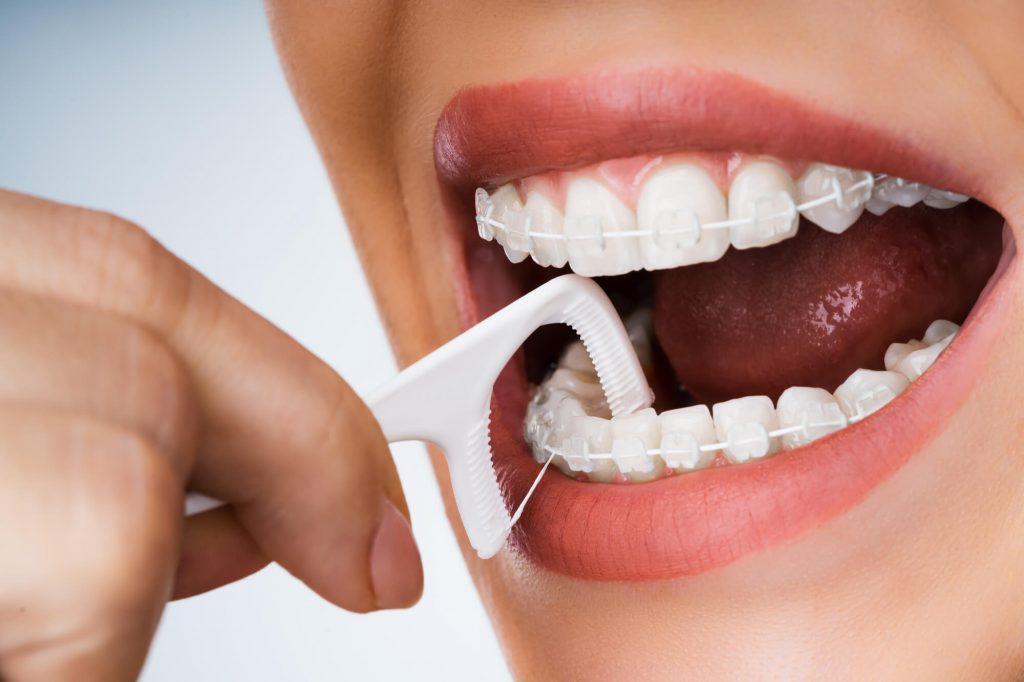
a woman with braces flossing teeth as instructed by her Dentist in midtown Manhattan

Every single dentist in Midtown Manhattan will disagree that flossing while wearing braces is impossible. The truth is, with practice, it will quickly become second nature and a natural extension of brushing your teeth.  

a woman with braces flossing teeth as instructed by a Dentist in midtown Manhattan

Why Floss?  

Affects Oral Health 

You may be perplexed about how a simple piece of floss can significantly affect your oral health. Flossing is surprisingly effective. No toothbrush, no matter how good or expensive it is, can get into all the nooks and crannies like floss can. 

Both practices remove food and bacteria from your teeth, which can cause cavities and discoloration. It also aids in the prevention of gingivitis and other oral health issues that can develop later in life. You can brush twice a day and floss once daily. 

How to Floss While Wearing Braces 

Flossing with braces can indeed be challenging at first. However, with perseverance, you’ll get the hang of it. You’ll be a pro in no time! Although flossing takes time, every dentist you’ll ask will say it’s worth the hassle! 

Follow Our Instructions 

  1. Brush your teeth to eliminate plaque, bacteria, and food particles. Make sure your toothbrush reaches all of your teeth’s surfaces – outer, inner, and flat surfaces of your top and bottom arch. 

  1. Wrap the ends of a 20-centimeter piece of floss around your index finger to form a tight grasp.  

  1. Thread the floss between the wire and your teeth, aligning it with the gap between your teeth. To remove any food particles or plaque build-up, slide the floss between the teeth, down the vertical edges of each tooth, and into the movable gum tissue. 

  1. After flossing each tooth, wrap the old floss around your finger to avoid reintroducing bacteria into your mouth. 

  1. Continue with the next tooth and repeat the procedure. 

Available Products for Flossing Teeth 

Not only is wax floss available on the market, but there are a few other options for cleaning your interdental region. Experiment with both to find which one you prefer. 

 Floss Threader 

You could use a floss threader to make cleaning around your braces simpler. The threader makes it easier to get past the wire and between the teeth. Parents may need to assist their children when flossing until they can do so independently. 

 Toothbrushes With Small Bristles 

Small bristles on interdental brushes make it easy to clean between teeth and remove food and plaque. Place the brush between your teeth and gently brush back and forth a few times to remove any food particles. Interdental brushes are only meant to be used with water. Toothpaste can be excessively abrasive. 

They come in various widths to fit the size of the gaps between your teeth. The best thing about interdental brushes is that they last anywhere from three days to three weeks before needing to be replaced. 

Interdental brushes are less aggressive on the gums than floss since they do not cut into the gums as floss does. The bristles on the brush may also be more effective in removing bacteria from the spaces and gaps than dental floss. 

Water Flosser 

To eliminate food, this type of floss sprays water between the teeth. Water flossers are also useful for cleaning around cables and brackets. However, this is rarely practiced because your toothbrush and floss will suffice. 

a Dentist in midtown Manhattan checks a patient's braces

Where to Find a Good Dentist in Midtown Manhattan 

At Coliseum Dental, we have experienced dentists who will cater to your dental needs. Don’t hesitate to reach us