
Dental Dilemmas Solved: How to Fill the Void of a Missing Tooth

consultation with a Dentist midtown Manhattan

Losing a tooth can be a dental dilemma that impacts not only your smile but also your confidence and oral health. It’s a situation that many of us hope to avoid, yet it’s more common than you might think. Whether due to injury, decay, or other factors, the loss of a tooth can create a void that affects your daily life. But fear not, because modern dentistry has an array of solutions to fill that void and restore your smile to its former glory. 

Dentist midtown Manhattan explaining procedure to patient

Exploring Tooth Replacement Options 

Dental Implants: 

  • Description: Dental implants are considered the gold standard for tooth replacement. They consist of a small titanium post surgically implanted into the jawbone, acting as a sturdy foundation for a replacement tooth (crown), bridge, or denture. 
  • Benefits: Dental implants offer exceptional stability and functionality, closely resembling natural teeth. They are long-lasting and do not require neighboring teeth to be altered. Implants also stimulate the jawbone, preserving bone density. 
  • Considerations: The implant process involves surgery and may require sufficient jawbone density. It may take several months to complete the treatment. 

Dental Bridges: 

  • Description: Dental bridges consist of one or more artificial teeth (pontics) anchored to adjacent healthy teeth, which serve as support (abutments). They literally “bridge” the gap created by missing teeth. 
  • Benefits: Bridges are an effective and durable solution for tooth replacement. They restore the ability to chew and speak comfortably. They also maintain facial structure and aesthetics. 
  • Considerations: To accommodate the bridge, the adjacent teeth must be modified. This irreversible alteration may affect those teeth in the long term. 

Dentures:

  • Description: Dentures are removable prosthetic devices used to replace multiple missing teeth. Complete dentures replace all teeth in an arch, while partial dentures replace a few missing teeth and anchor to existing ones. 
  • Benefits: Dentures are versatile and cost-effective. They restore basic oral functions like eating and speaking. They are also removable for cleaning and maintenance. 
  • Considerations: Dentures may require adjustments and may take time to adapt to. Over time, they may need relining or replacement due to changes in jawbone structure. 

Removable Partial Dentures: 

  • Description: Removable partial dentures are similar to regular dentures but are designed to replace only a few missing teeth and attach to natural teeth with clasps or precision attachments. 
  • Benefits: They provide an affordable solution for tooth replacement and are relatively easy to maintain. 
  • Considerations: They rely on adjacent teeth for support, which may affect those teeth over time. Some patients find them less stable than other options. 

Implant-Supported Dentures:

  • Description: Implant-supported dentures combine the stability of dental implants with the convenience of dentures. A few strategically placed implants secure the denture in place. 
  • Benefits: Implant-supported dentures offer enhanced stability, preventing slipping or discomfort associated with traditional dentures. They improve chewing efficiency and overall comfort. 
  • Considerations: The implant-supported denture process can be more expensive than traditional dentures or bridges. 
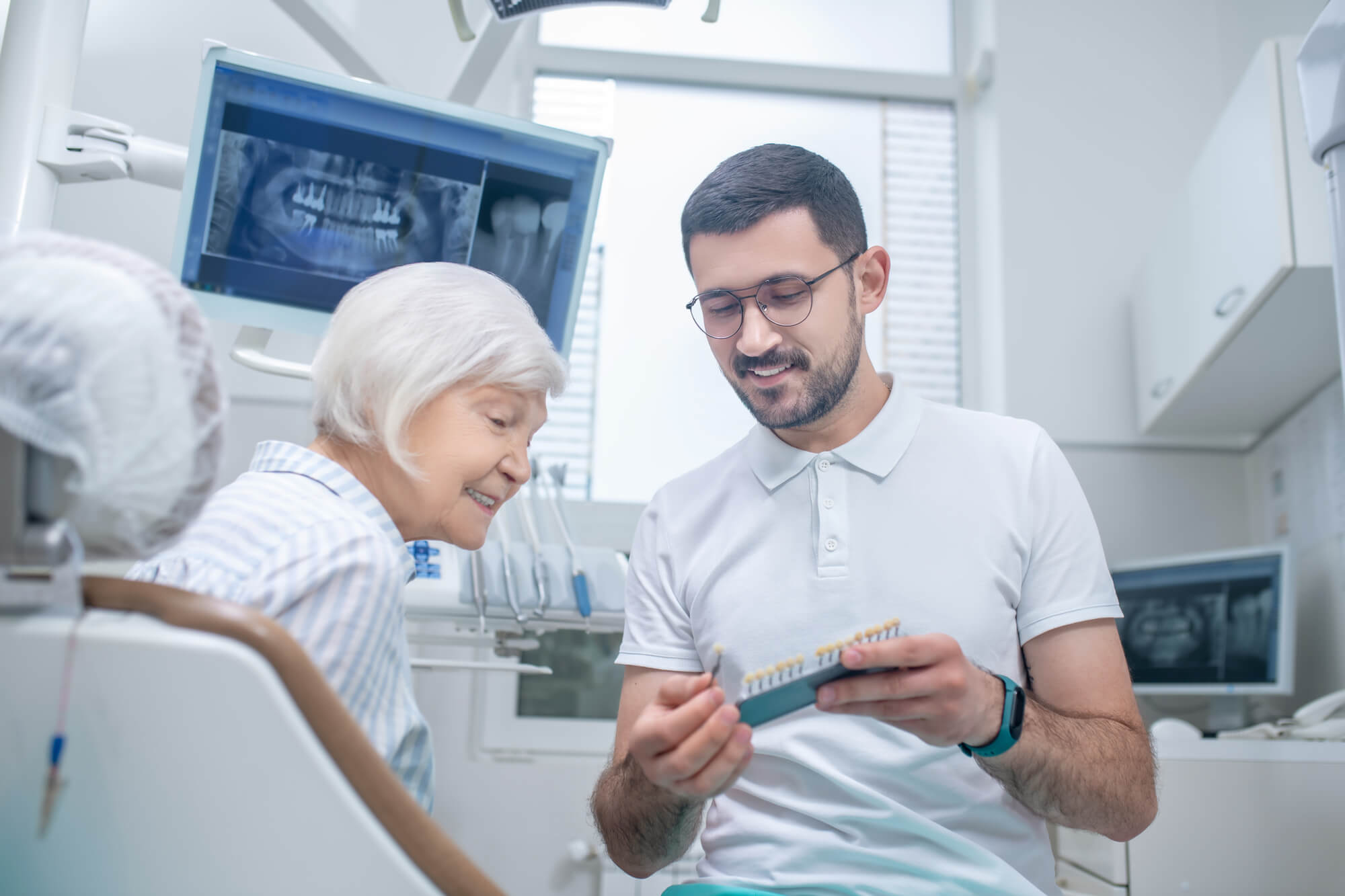
Dentist midtown Manhattan and patient discussing

Need Expert Guidance From a Trusted Dentist in Midtown Manhattan? 

Whether you opt for dental implants, bridges, dentures, or another option, the key is to seek guidance from a skilled dentist who can assess your unique situation and guide you toward the ideal choice. 

At Coliseum Dental, our dedicated team is committed to helping you find the best tooth replacement solution for your specific needs. We understand the importance of a confident smile and a fully functional set of teeth, and we’re here to support you on your journey to dental restoration. Contact us for an appointment.  

Are There Restrictions on Getting Teeth Whitening?

Restrictions on getting teeth whitening

Are you interested in teeth whitening? The inside information is right here. Discover the different alternatives to cosmetic dentistry in Murray Hill. In this article, you’ll learn how teeth whitening works, the process used to whiten teeth effectively, and if anyone can get their teeth whitened. 

Woman after cosmetic dentistry Murray Hill

Teeth Whitening Q and A’s

Who Makes the Best Teeth Whitening Candidates?

Suitable candidates for professional teeth whitening are those with healthy gums and teeth free of fillings or other restorations. Patients who have yellow teeth are more likely to benefit from treatment. 

Do All Teeth Whitening Procedures Work? 

Unfortunately, not everyone can benefit from whitening. For instance, whitening usually helps with yellow discoloration. However, over-the-counter whitening treatments may not effectively work on teeth with brown or gray tones. 

Additionally, whitening won’t help if the discoloration is brought on by medications or an accident. Finally, patients with dental caps, veneers, crowns, and fillings are not good candidates for tooth whitening. 

What Teeth Whitening Options Do I Have?

If you want to whiten your teeth, you have a variety of options to choose from. 

  • In-Office Teeth Whitening 

The most pleasing results come from professional in-office whitening, which often whitens teeth by around eight shades. Professional teeth whitening is more expensive than other options, but the benefits are more noticeable and immediate. This process is also safer than bleaching at home because the whitening is done by a professional. 

  • At-Home 

This includes whitening toothpaste, teeth-whitening strips, and whitening-solution-filled mouth trays. All of these at-home bleaching techniques have benefits, but they also have some downsides.  

One drawback is that it takes time to see results, and those effects are less dramatic than those you may get from professional whitening. Additionally, those with sensitive gums or teeth shouldn’t use these techniques because they will only create more harm than good. 

  • Bleaching Toothpaste 

Chemicals are used in whitening toothpaste to brighten teeth. However, these toothpastes usually brighten teeth by a shade or two. Hence, the most subtle outcomes are provided by this type. 

What Causes Yellow Teeth?

There are several reasons why people get yellow teeth. The most frequent causes are: 

  • Early tetracycline antibiotic exposure 
  • Excessive fluoride intake  
  • Inadequate dental care 
  • Aging 
  • Trauma 
  • Drinking dark beverages like red wine, tea, coffee, and cola 
  • Smoking 

Most people don’t think about how becoming older changes the shade of their teeth. The enamel makes up the outer layer of your teeth. Dentin, a yellow tissue layer, lies beneath it. Studies show that enamel starts to erode with age. When this occurs, the dentin peeks through, and the teeth seem yellow.

What Are the Obstacles to Effective Teeth Whitening?

Special considerations are required if your mouth contains fillings or other materials. Your natural teeth and inorganic restorations may not match after tooth whitening since crowns, bridges, and other inorganic restorations are resistant to the effects of the process.  

If inconsistent color is going to be an issue, your dentist may be able to devise a plan to provide more reliable results. New fillings or other repairs can be necessary for specific circumstances. Even if teeth whitening is not an option, your dentist can still help you achieve the perfect smile with veneers or bonding. 

Patient receiving cosmetic dentistry Murray Hill

Know More About Cosmetic Dentistry in Murray Hill

Since teeth tend to be yellow with age, very few people have naturally white teeth. However, good oral hygiene and routine dental exams can help keep the teeth white. 

Although yellow teeth are not usually a symptom of health issues, a dentist can check for tooth decay and enamel loss. If you want to arrange professional teeth whitening or other treatments, please schedule your dental appointment. 

Dental Bridges: Everything You Should Know

Have you ever wondered what its like to revive your teeth with restorative dentistry in Murray Hill? Are you having any hesitations about whether you should do it? Rest assured that there are plenty of ways to enhance your smile and your confidence.  

One of them is having a dental bridge in case you’re missing one or more teeth. It can be used for both cosmetic and medical reasons. A dental bridge comprises one or more synthetic teeth that fills the gap. It allows any possible displacement and gives the appearance of a healthy and beautiful smile.    

ceramic-fake-teeth-for-restorative-dentistry-murray-hill

Types of Dental Bridges    

Traditional Dental Bridge   

The most popular kind of dental bridge is the traditional dental bridge. It is ideal for patients with natural teeth but have a missing tooth. This type is composed of an artificial tooth anchored in place by dental crowns. Additionally, dental crowns are suitable for providing anchor points, while the artificial tooth closes the gap in your teeth, making it look natural.    

Cantilever Dental Bridge    

The difference between this type from the traditional ones is that the fake tooth is positioned by a crown placed and anchored on one tooth. This is commonly used in the front teeth because they can lead to too much stress when placed at the back of the mouth. Enamel removal from the supporting tooth may also be done to improve stability.    

Maryland Bonded Bridge    

This is built using the same method as a traditional dental bridge. Rather than using dental crowns, a metal or porcelain framework acts as an anchor. Since it is joined at the back, a framework reduces changes to neighboring teeth. It can only be performed when both sides of the gap have natural teeth.    

Implant-Supported Bridge    

Dental implants replace crowns or frames. While cantilever bridges are performed on the front teeth, this type of dental bridge treatment uses implants rather than traditional ones. Implant-supported bridges can be carried out in any area of the mouth.  

This dental bridge treatment does not require the support of adjacent teeth and is ideal for more significant gaps, especially involving multiple missing teeth. Implant-supported bridges are also notable for their high durability, and ability to restore normal functioning. The most significant drawback is that they involve surgical procedures and a recovery period.    

Advantages of Getting Dental Bridges    

  • Maintains the original form by preventing bone loss from the jaw in the missing tooth region. 
  • Recovers the ability to chew food properly. 
  • Prevents adjacent teeth from migrating into the empty space that may cause biting difficulties and other complications. 
  • Restores the ability to talk normally as missing teeth can make it difficult to pronounce words correctly.    

Benefits You Can Get from Dental Bridges    

They are well known for their curative and visual benefits. The following are some of the most important ones:    

  • Gaps can usually trigger bone loss in the jaw, and dental bridges help preserve a standard facial shape.    
  • Filling holes in your mouth can help you chew food more smoothly.    
  • They give your jawline a more outward appearance. Gaps in your teeth can give you a deformed impression, especially when you open your mouth.    
beautiful porcelain teeth because of restorative dentistry Murray Hill

Do You Have Any Inquiries About Restorative Dentistry in Murray Hill?    

If you feel you want to have dental bridges for the sake of your overall oral health performance. Give us a call so our dental experts can help you out!