Dental Dilemmas Solved: How to Fill the Void of a Missing Tooth

consultation with a Dentist midtown Manhattan

Losing a tooth can be a dental dilemma that impacts not only your smile but also your confidence and oral health. It’s a situation that many of us hope to avoid, yet it’s more common than you might think. Whether due to injury, decay, or other factors, the loss of a tooth can create a void that affects your daily life. But fear not, because modern dentistry has an array of solutions to fill that void and restore your smile to its former glory. 

Dentist midtown Manhattan explaining procedure to patient

Exploring Tooth Replacement Options 

Dental Implants: 

  • Description: Dental implants are considered the gold standard for tooth replacement. They consist of a small titanium post surgically implanted into the jawbone, acting as a sturdy foundation for a replacement tooth (crown), bridge, or denture. 
  • Benefits: Dental implants offer exceptional stability and functionality, closely resembling natural teeth. They are long-lasting and do not require neighboring teeth to be altered. Implants also stimulate the jawbone, preserving bone density. 
  • Considerations: The implant process involves surgery and may require sufficient jawbone density. It may take several months to complete the treatment. 

Dental Bridges: 

  • Description: Dental bridges consist of one or more artificial teeth (pontics) anchored to adjacent healthy teeth, which serve as support (abutments). They literally “bridge” the gap created by missing teeth. 
  • Benefits: Bridges are an effective and durable solution for tooth replacement. They restore the ability to chew and speak comfortably. They also maintain facial structure and aesthetics. 
  • Considerations: To accommodate the bridge, the adjacent teeth must be modified. This irreversible alteration may affect those teeth in the long term. 

Dentures:

  • Description: Dentures are removable prosthetic devices used to replace multiple missing teeth. Complete dentures replace all teeth in an arch, while partial dentures replace a few missing teeth and anchor to existing ones. 
  • Benefits: Dentures are versatile and cost-effective. They restore basic oral functions like eating and speaking. They are also removable for cleaning and maintenance. 
  • Considerations: Dentures may require adjustments and may take time to adapt to. Over time, they may need relining or replacement due to changes in jawbone structure. 

Removable Partial Dentures: 

  • Description: Removable partial dentures are similar to regular dentures but are designed to replace only a few missing teeth and attach to natural teeth with clasps or precision attachments. 
  • Benefits: They provide an affordable solution for tooth replacement and are relatively easy to maintain. 
  • Considerations: They rely on adjacent teeth for support, which may affect those teeth over time. Some patients find them less stable than other options. 

Implant-Supported Dentures:

  • Description: Implant-supported dentures combine the stability of dental implants with the convenience of dentures. A few strategically placed implants secure the denture in place. 
  • Benefits: Implant-supported dentures offer enhanced stability, preventing slipping or discomfort associated with traditional dentures. They improve chewing efficiency and overall comfort. 
  • Considerations: The implant-supported denture process can be more expensive than traditional dentures or bridges. 
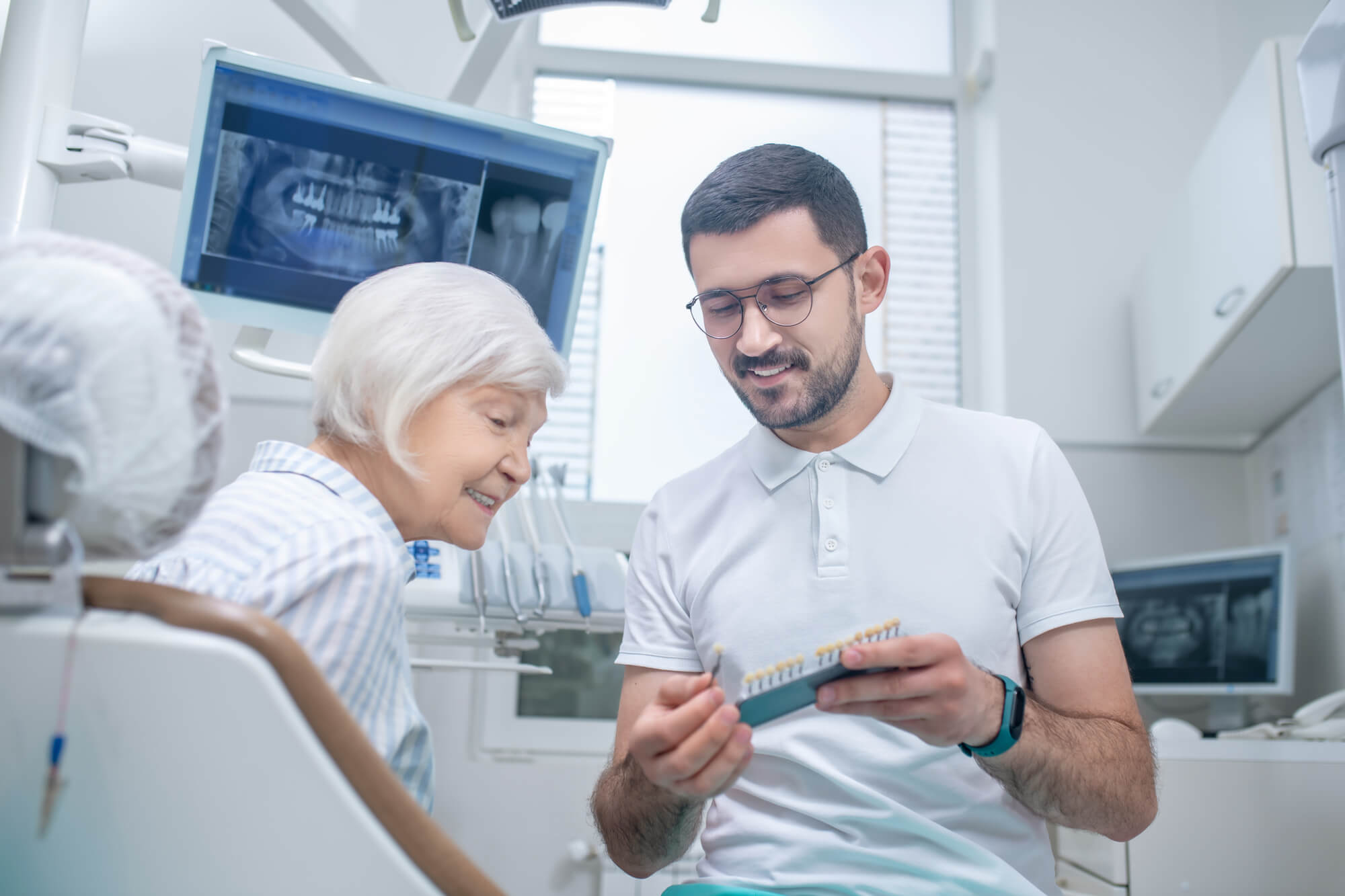
Dentist midtown Manhattan and patient discussing

Need Expert Guidance From a Trusted Dentist in Midtown Manhattan? 

Whether you opt for dental implants, bridges, dentures, or another option, the key is to seek guidance from a skilled dentist who can assess your unique situation and guide you toward the ideal choice. 

At Coliseum Dental, our dedicated team is committed to helping you find the best tooth replacement solution for your specific needs. We understand the importance of a confident smile and a fully functional set of teeth, and we’re here to support you on your journey to dental restoration. Contact us for an appointment.  

Dental Health and Your Immune System 

a smiling patient at the Dentist in midtown Manhattan 

Did you know oral health can significantly impact your overall health and well-being? According to a dentist in Midtown Manhattan, by maintaining good oral health, you can boost your immune system and ensure that you can defend yourself from common infections and diseases. How do your oral health and the immune system interact? Continue reading to know the answer.

a smiling woman after seeing a Dentist in midtown Manhattan 

How Is Your Immune System Affected by Dental Health

Bacteria

Bacteria are largely to blame for the issues that result from inadequate oral hygiene. Our mouth is the ideal place for bacteria to proliferate. It is warm and damp, and bacteria can access plenty of nutrients. Food residues left behind after not brushing or flossing allow germs to fester and increase in your gums. With this, there will be a lot of issues when bacterial growth is out of control.

Even though bacteria enter the body through the mouth, issues do not simply affect the tooth cavity. If left untreated, bacteria can potentially infect the circulation and respiratory system. Gingivitis, the most prevalent type of gum disease, is just a minor condition but can still affect your immune system. If not treated, it can trigger an immunological response when it enters the bloodstream, which could start a domino effect that results in numerous health issues.

Immune System

Actually, it’s fairly easy. Your immune system only has a finite number of immune cells to defend itself against viral and bacterial illnesses. It will become less effective and more susceptible to illness when your immune cells are overused and the process is overextended.

A significant contributing reason to this can be poor oral health. There are billions of microorganisms in your mouth. They will consume food particles, expel acid that rots your teeth, and try to infect your gums if left unchecked.

The gums will swell and inflame when oral germs try to infect them because the immune system rushes to defend you. Fewer immune cells are available to tackle various health issues and respond to viruses and bacteria throughout your body if your immune cells have to fight off bacteria in your mouth. It will, later on, result in a weakened immune response overall.

Keep Your Mouth Healthy to Maintain Good Overall Health

The threat of negative health impacts is reduced when you have a strong immune system that controls the germs in your mouth and the rest of your body. When your immune system works properly, it quickly removes microorganisms and guards against additional ailments.

  • Dental Cleanings

For tooth cleanings, you need to visit your dentist every six months. Cleanings and oral exams, which remove bacteria-filled plaque and tartar, enable dentists to monitor your oral health and advise you on better care of your teeth and gums.

  • Eat Less Sugar  

Reducing your sugar intake will help keep your dental and overall health in its optimal state. A healthy diet should be low in sugar and carbohydrates and high in whole grains, vegetables, fruits, and lean meats.

After meals, think about using mouthwash to eliminate oral bacteria and freshen your breath. Mouthwash is never an alternative for flossing and brushing, but it can help. With the right immunity, using it after meals can also help remove food particles that bacteria feed on and prevent mouth infections.

  • Brush and Floss   

Your teeth must be properly brushed to maintain their health. Ideally, it would help if you brush twice a day – once after you get up and once before bed. This will get rid of the most bacteria possible. At any time, you can floss. Use the right method, be thorough, and clean the spaces between your teeth of plaque, bacteria, and food particles.

a Dentist in midtown Manhattan giving a thumbs up sign

Get the Dental Care You Need From a Dentist in Midtown Manhattan

At Coliseum Dental, we ensure that your dental health is our top priority. Please schedule an appointment with us!

How to Floss When You Have Braces

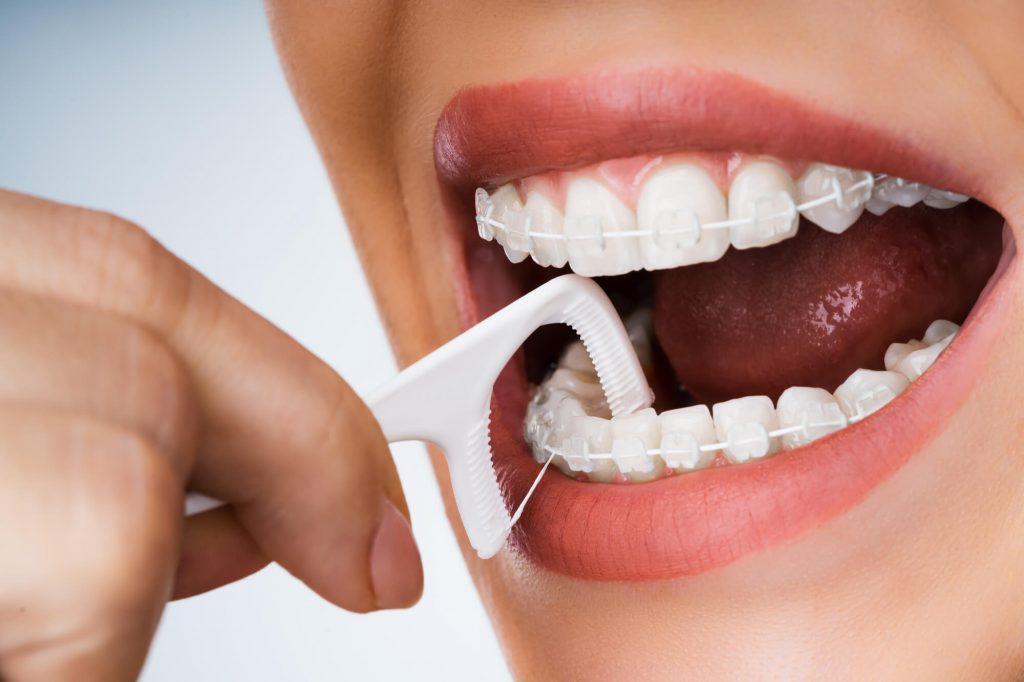
a woman with braces flossing teeth as instructed by her Dentist in midtown Manhattan

Every single dentist in Midtown Manhattan will disagree that flossing while wearing braces is impossible. The truth is, with practice, it will quickly become second nature and a natural extension of brushing your teeth.  

a woman with braces flossing teeth as instructed by a Dentist in midtown Manhattan

Why Floss?  

Affects Oral Health 

You may be perplexed about how a simple piece of floss can significantly affect your oral health. Flossing is surprisingly effective. No toothbrush, no matter how good or expensive it is, can get into all the nooks and crannies like floss can. 

Both practices remove food and bacteria from your teeth, which can cause cavities and discoloration. It also aids in the prevention of gingivitis and other oral health issues that can develop later in life. You can brush twice a day and floss once daily. 

How to Floss While Wearing Braces 

Flossing with braces can indeed be challenging at first. However, with perseverance, you’ll get the hang of it. You’ll be a pro in no time! Although flossing takes time, every dentist you’ll ask will say it’s worth the hassle! 

Follow Our Instructions 

  1. Brush your teeth to eliminate plaque, bacteria, and food particles. Make sure your toothbrush reaches all of your teeth’s surfaces – outer, inner, and flat surfaces of your top and bottom arch. 

  1. Wrap the ends of a 20-centimeter piece of floss around your index finger to form a tight grasp.  

  1. Thread the floss between the wire and your teeth, aligning it with the gap between your teeth. To remove any food particles or plaque build-up, slide the floss between the teeth, down the vertical edges of each tooth, and into the movable gum tissue. 

  1. After flossing each tooth, wrap the old floss around your finger to avoid reintroducing bacteria into your mouth. 

  1. Continue with the next tooth and repeat the procedure. 

Available Products for Flossing Teeth 

Not only is wax floss available on the market, but there are a few other options for cleaning your interdental region. Experiment with both to find which one you prefer. 

 Floss Threader 

You could use a floss threader to make cleaning around your braces simpler. The threader makes it easier to get past the wire and between the teeth. Parents may need to assist their children when flossing until they can do so independently. 

 Toothbrushes With Small Bristles 

Small bristles on interdental brushes make it easy to clean between teeth and remove food and plaque. Place the brush between your teeth and gently brush back and forth a few times to remove any food particles. Interdental brushes are only meant to be used with water. Toothpaste can be excessively abrasive. 

They come in various widths to fit the size of the gaps between your teeth. The best thing about interdental brushes is that they last anywhere from three days to three weeks before needing to be replaced. 

Interdental brushes are less aggressive on the gums than floss since they do not cut into the gums as floss does. The bristles on the brush may also be more effective in removing bacteria from the spaces and gaps than dental floss. 

Water Flosser 

To eliminate food, this type of floss sprays water between the teeth. Water flossers are also useful for cleaning around cables and brackets. However, this is rarely practiced because your toothbrush and floss will suffice. 

a Dentist in midtown Manhattan checks a patient's braces

Where to Find a Good Dentist in Midtown Manhattan 

At Coliseum Dental, we have experienced dentists who will cater to your dental needs. Don’t hesitate to reach us