Laser Dentistry vs. Traditional Dental Procedures: Which is Better?

Kid undergoing laser dentistry procedure in murray hill

When it comes to dental procedures, many patients aren’t aware of the advances dentistry made in recent years. One such advancement is laser dentistry in Murray Hill, which has become an increasingly popular option for treating dental problems. However, some may still wonder whether laser dentistry is better than traditional methods and equipment. 

Before your next dentist appointment, read on to understand the different uses of laser and traditional dentistry. 

Dentist performing a laser dentistry procedure in murray hill

Advantages of Laser Dentistry 

Laser dentistry is a non-invasive method used to perform complex dental procedures. The laser dentists use emits a focused beam of light that can cut through or vaporize tissue with precision. This technique minimizes the need for traditional dental tools like scalpels or drills. Laser dentistry offers several advantages, including: 

Less Pain and Discomfort  

One of the main advantages of laser dentistry is that it can significantly reduce pain and discomfort during and after a procedure. Lasers replace drills and more aggressive dental tools, which generate more pressure and heat. As a result, the treated area isn’t as sensitive and swollen.  

Laser dentistry can also seal nerve endings, making for a comfortable and pain-free recovery period at home. 

Improved Precision 

Traditional dental procedures can damage neighboring teeth and gums while the dentist removes decayed or infected tissue. However, lasers can target specific areas without affecting other parts of your mouth. Therefore, laser dentistry is ideal for procedures that require precision, such as gum reshaping and cavity detection. 

Reduced Bleeding and Swelling 

Lasers can cauterize blood vessels as they cut, meaning the light immediately seals them to prevent unnecessary bleeding. Not only does this process promote faster healing and recovery, but it also reduces swelling and infection. 

Faster Healing Time 

Because laser dentistry is less invasive than traditional procedures, patients typically heal and return to their everyday lives in a few days. Laser dentistry also stimulates tissue regeneration, which also speeds up recovery. In some cases, patients may even be able to resume their normal activities immediately after a laser procedure. 

Advantages of Traditional Dental Procedures  

Established Track Record 

Traditional dental procedures have been used for decades and have a proven successful track record. Even though laser dentistry is perfectly safe, dentists are more familiar with conventional techniques. Patients also feel more at ease when undergoing a procedure with methods they know. 

Lower Cost  

Another advantage of traditional dental procedures is that they are often cheaper than laser dentistry. Laser equipment is more expensive to purchase and maintain, and not all insurance plans cover treatments performed with them. 

Widely Available and Accessible 

While laser dentistry is becoming more common, not all dental practices have the equipment or expertise necessary to perform laser procedures. In contrast, traditional dental procedures are more established and widely available. Therefore, patients can find more dentists trained and experienced in performing these procedures. This advantage is vital to patients living in more remote or underserved areas with limited access to specialized dental care.  

Examples of Procedures Suited for Laser Dentistry 

Gum Reshaping and Crown Lengthening 

Gum reshaping is a procedure during which a dental professional removes excess gum tissue to improve your smile’s appearance or address periodontal disease. During crown lengthening, a dentist gets rid of bone and gum tissue to expose more of the tooth’s crown, typically to prepare your smile for a dental crown or bridge. 

A dental professional can use laser dentistry to reshape, remove, and cauterize this tissue with greater precision and less discomfort. 

Gum Bleaching 

Gum bleaching is a cosmetic procedure to lighten the shade of discolored gums and enhance your smile’s looks. With the beam of light that lasers emit, your dentist can remove excess pigmentation from the gums in a non-invasive and painless way. 

Cold Sore Treatment 

Cold sores are painful blisters that develop on or around the lips, and the herpes simplex virus causes them. A low-level laser can target the virus and stimulate the body’s natural healing process, reducing the pain and speeding up recovery. Laser treatment can also reduce the chances of blisters reappearing. 

Patient undergoing a laser dentistry procedure in murray hill

Looking for Laser Dentistry Procedures in Murray Hill? 

If you want to know more about the benefits of laser dentistry for your dental needs, schedule a visit with us at Coliseum Dental. Contact us today! 

Tips to Ensure Your Cosmetic Treatment Will Last

woman after getting Cosmetic dentistry in Hells kitchen

Many people find their smiles to be unattractive. Cosmetic dentistry services in Hell’s Kitchen can easily improve the look of your smile if you have discolored or damaged teeth. But what if you’ve already gotten a cosmetic treatment and don’t know how to preserve the results? Read on to discover the effective ways to maintain those beautiful teeth.

woman after getting Cosmetic dentistry in Hells kitchen

How to Keep Your Smile After a Cosmetic Dental Treatment

Plan Your Dental Appointments

This cosmetic dentistry aftercare advice is frequently ignored. Dental crowns and veneers will remain pristine if you regularly visit the dentist. Also, tooth decay can be prevented with routine exams.

Food that has become wedged between the veneers and teeth can easily be removed by the dentist. This advice will also protect you against potential gum conditions. In essence, it is the finest advice for maintaining good oral hygiene.  

Do Not Grind Your Teeth

After having cosmetic dental operations, many people frequently grind or clench their teeth. The veneers and crowns are harmed when you do this bad dental habit. Dental crowns degrade with time, and veneers crack over time.  

Furthermore, the sensitivity of the teeth will rise if you grind or clench your teeth. To break this behavior, you must be mindful of your porcelain veneers. Mouthguards are another option. Purchase this dental device to safeguard your teeth and veneers. Your veneers will last longer if you use this aftercare suggestion.  

Eliminate Bad Habits

Aside from teeth grinding and clenching, smoking is a widespread vice that leads to a lot of oral issues. One of them is tooth deterioration, which makes a person’s smile look bad. Dental bridges, veneers, and crowns are all compromised by smoking. In the beginning, gum conditions cause the teeth to become loose, but it will soon result in more serious dental conditions.   

Avoiding alcohol and smoking is a wise cosmetic dentistry aftercare suggestion. It’s also the best advice for keeping your teeth white longer.  

Take Painkillers

Numbness can occasionally develop after receiving cosmetic dental treatments. This is primarily due to the anesthetic techniques employed by cosmetic dentists. Once it wears off, this will undoubtedly make your teeth more sensitive and uncomfortable. You can deal with these problems by using painkillers. The finest medicines for pain relief are analgesics.  

Your gums can become irritated by the dental cement used to make the crowns. The anesthetic gel can be quite beneficial in such circumstances. For your pain medication, a qualified cosmetic dentist is required.    

Don’t Eat Hard Foods

Although veneers, crowns, and other dental treatments are sturdy, hard and crunchy food can damage them. Likewise, chewy foods could chip the porcelain. This aftercare advice will help you avoid paying more for unnecessary dental fixes.  

Stay Away From Highly-Pigmented Food and Beverage

This is a helpful aftercare advice for teeth whitening. Drinks that are highly pigmented may leave stains on your teeth for good. Avoid red wines, club soda, beer, and coffee. Teeth that are discolored will undoubtedly ruin your smile.   

When drinking these beverages, you can use a straw so it won’t directly come in contact with your teeth. This also allows the beverage to pass past the veneers without staining them. Further, after consuming highly pigmented food and beverage, it would be beneficial to rinse your mouth with water.  

chewing gum for Cosmetic dentistry in Hells kitchen

Where Can I Get Cosmetic Dentistry Services in Hell’s Kitchen?

Cosmetic dental procedures can help you have teeth, gums, and a smile that looks better. You can extend and preserve the effects of your cosmetic dental treatments in various ways. It’s just a matter of how you follow these aftercare tips. Schedule an appointment with our dental professionals. 

Dental Health and Your Immune System 

a smiling patient at the Dentist in midtown Manhattan 

Did you know oral health can significantly impact your overall health and well-being? According to a dentist in Midtown Manhattan, by maintaining good oral health, you can boost your immune system and ensure that you can defend yourself from common infections and diseases. How do your oral health and the immune system interact? Continue reading to know the answer.

a smiling woman after seeing a Dentist in midtown Manhattan 

How Is Your Immune System Affected by Dental Health

Bacteria

Bacteria are largely to blame for the issues that result from inadequate oral hygiene. Our mouth is the ideal place for bacteria to proliferate. It is warm and damp, and bacteria can access plenty of nutrients. Food residues left behind after not brushing or flossing allow germs to fester and increase in your gums. With this, there will be a lot of issues when bacterial growth is out of control.

Even though bacteria enter the body through the mouth, issues do not simply affect the tooth cavity. If left untreated, bacteria can potentially infect the circulation and respiratory system. Gingivitis, the most prevalent type of gum disease, is just a minor condition but can still affect your immune system. If not treated, it can trigger an immunological response when it enters the bloodstream, which could start a domino effect that results in numerous health issues.

Immune System

Actually, it’s fairly easy. Your immune system only has a finite number of immune cells to defend itself against viral and bacterial illnesses. It will become less effective and more susceptible to illness when your immune cells are overused and the process is overextended.

A significant contributing reason to this can be poor oral health. There are billions of microorganisms in your mouth. They will consume food particles, expel acid that rots your teeth, and try to infect your gums if left unchecked.

The gums will swell and inflame when oral germs try to infect them because the immune system rushes to defend you. Fewer immune cells are available to tackle various health issues and respond to viruses and bacteria throughout your body if your immune cells have to fight off bacteria in your mouth. It will, later on, result in a weakened immune response overall.

Keep Your Mouth Healthy to Maintain Good Overall Health

The threat of negative health impacts is reduced when you have a strong immune system that controls the germs in your mouth and the rest of your body. When your immune system works properly, it quickly removes microorganisms and guards against additional ailments.

  • Dental Cleanings

For tooth cleanings, you need to visit your dentist every six months. Cleanings and oral exams, which remove bacteria-filled plaque and tartar, enable dentists to monitor your oral health and advise you on better care of your teeth and gums.

  • Eat Less Sugar  

Reducing your sugar intake will help keep your dental and overall health in its optimal state. A healthy diet should be low in sugar and carbohydrates and high in whole grains, vegetables, fruits, and lean meats.

After meals, think about using mouthwash to eliminate oral bacteria and freshen your breath. Mouthwash is never an alternative for flossing and brushing, but it can help. With the right immunity, using it after meals can also help remove food particles that bacteria feed on and prevent mouth infections.

  • Brush and Floss   

Your teeth must be properly brushed to maintain their health. Ideally, it would help if you brush twice a day – once after you get up and once before bed. This will get rid of the most bacteria possible. At any time, you can floss. Use the right method, be thorough, and clean the spaces between your teeth of plaque, bacteria, and food particles.

a Dentist in midtown Manhattan giving a thumbs up sign

Get the Dental Care You Need From a Dentist in Midtown Manhattan

At Coliseum Dental, we ensure that your dental health is our top priority. Please schedule an appointment with us!

Six Cosmetic Treatments That Benefit Your Oral Health

a smiling woman after seeing an expert in Cosmetic dentistry in midtown Manhattan 

More people are turning to cosmetic dentistry in midtown Manhattan to enhance or restore their smiles’ appearance. A remarkable 99.7% of Americans believe that a smile is a valuable social asset, and 74% think having an unpleasant smile could hinder career success. Here are the top six procedures used in cosmetic dentistry today.

Cosmetic dentistry in midtown Manhattan 

Common Cosmetic Dental Treatments

Teeth Whitening

Nowadays, people place a lot of importance on the shade of their teeth, making dental bleaching one of the most common procedures of cosmetic dentistry in Times Square. Numerous studies have shown that achieving an aesthetically pleasing smile positively impacts patients’ psycho-emotional states and quality of life. These studies demonstrate the positive effects of teeth whitening on an individual’s oral hygiene both during and immediately after the procedure.

Dental Implant

Although dental implants belong to the prosthodontic category, they are sometimes considered cosmetic dental treatments by patients. They are the pinnacle of restorative and cosmetic dentistry because they offer the highest level of strength and durability with aesthetics similar to natural teeth. They are a long-term remedy for tooth loss that includes surgically inserting an artificial tooth root (generally made of titanium) into the jaw, which incorporates with the bone through osseointegration. The peerless durability attributed to implants comes from this.

A crown is secured above the implant to serve as the real tooth alternative. The invasive surgery demands a six-month healing period before the crown can be inserted and the process is complete.

Braces

Braces belong to both orthodontic and cosmetic dentistry. Maintaining a decent dental hygiene routine can help avoid gum disease, tooth decay, and bad breath. It can cause several health issues by letting germs accumulate and harden into plaque.

Your orthodontist will examine your mouth and gums to ensure they are clean and free of infections before you start your journey with braces. Moving teeth when suffering from an infection is risky. An orthodontist is forced to schedule another appointment for orthodontic treatment if an infection arises while it is being administered if this happens.

Gum Contouring

A gummy smile, in which an excessive quantity of gum tissue is revealed when you smile, is a typical smile concern shared by many people. Treatment options for gummy smiles include laser therapy, surgical lip repositioning, orthodontics, maxillofacial surgery, and gingival sculpting. Periodontists, orthodontists, and occasionally oral surgeons specialize in performing gingival reshaping procedures.

Given the numerous factors at play, it is challenging to determine the cost of gingival contouring. Speaking with an experienced dentist is the best approach to acquiring a treatment cost estimate.

Dental Bonding

The dental bonding is harmless and won’t hurt your mouth because the dental adhesive serves as a sealant and a microbiological barrier. Maintain appropriate oral hygiene practices to prevent coloring the bonding material. As a result, if you’re seeking safe treatment, dental bonding at Coliseum Dental is an excellent choice.

Dental Crown

A tooth with a dental crown is less susceptible to decay. Dental crowns can be made of metal or porcelain, both resistant to the acids produced by dental plaque. Without good dental hygiene, there is a danger that the tooth below will decay as plaque builds up along the gum line.

Tooth sensitivity is more common in people with considerable tooth damage. The enamel of those who grind their teeth frequently may deteriorate over time. Additionally, the teeth may deteriorate due to exposure to acid from food, beverages, bulimia, or gastroesophageal reflux disease. Pain is unavoidable once the nerves in the teeth are exposed. Dental crowns provide pain relief by securing the nerves.

a smiling woman seeing an expert in Cosmetic dentistry in midtown Manhattan 

Inquire About Cosmetic Dentistry in Midtown Manhattan

If you’re planning to get teeth whitening, dental implants, braces, or gum contouring, contact our dental professionals at Coliseum Dental. Call us for more info!

How Are Laser Treatments Performed?

Doctor performing Laser Dentistry in midtown Manhattan on a patient 

Drilling and long-numbing needles are the most feared aspects of dental work. The good news is that there are superior alternatives. Thanks to laser dentistry in Midtown Manhattan, cavities and other oral health issues can be treated naturally without using dental drills or hazardous chemicals.   

Your dentist can perform a variety of day-to-day dental operations using lasers. Dentists can preserve more of your natural tooth structure and gum tissue with laser treatments. In contrast to conventional therapies, most of these procedures are performed without anesthesia.  

Patient getting treated with Laser Dentistry in midtown Manhattan 

Expectations, Benefits, and Drawbacks of Laser Dentistry

What to Expect

Most laser dentistry procedures resemble their related dental procedures quite closely. For instance, if your dentist is utilizing a dental laser to fill a cavity, they would follow the same steps as they would for a conventional filling, but instead of using a drill, they will use a laser to remove tooth rot.   

Depending on the operation, your dentist may need to provide anesthesia to numb your mouth. For instance, deeper cavities require numbing shots, while very shallow cavities may not.   

After preparing your mouth, your dentist will use a laser to complete the procedure. They will utilize the laser to remove tooth decay in cases of cavities. You may also hear popping sounds when the laser vaporizes the tooth-decaying areas.  

Likewise, your dentist will fill the cavity after removing the decayed tooth, the same as they would if they were using a dental drill. However, dentists frequently need to shape and polish the composite with a drill, even with laser operations.   

Compared to the identical procedure performed using conventional methods, most patients report less pain following laser dental procedures. The nerves in your mouth can heal more quickly with laser treatments, hastening the process of returning things to normal.  


What Are the Benefits?

What advantages can laser dentistry offer? Among the benefits of laser dentistry are the following:  

  • No Sutures Are Required – Sutures are needed for several dental treatments, like soft tissue biopsies, when done by conventional means. There is no need for sutures when dentists or oral surgeons perform these operations with a laser.  
  • Early Dental Problem Identification – Lasers can identify cavities, germs, and other dental issues earlier than other techniques. For instance, this method can frequently recognize dental decay before it is visible on an x-ray or during a standard checkup.  
  • Leaving Healthy Tissues Intact – Dental drills for cavity treatments remove some good tooth tissue. You can maintain more of your natural tooth because laser treatments only remove the decaying tooth portions.  
  • Less Bleeding and Pain – Dental lasers cut through soft tissue by enclosing blood vessels and nerve endings, minimizing bleeding and post-operative discomfort.  
  • A Quicker Recovery Period – Dental surgeries performed with laser technology heal faster than those achieved with conventional methods.  


What Are the Drawbacks?

Some laser dental procedures require an anesthetic. In specific scenarios, numbing shots might still be necessary. It’s also important to remember that teeth with fillings or other dental treatments cannot be treated with laser dentistry. Additionally, lasers cannot be used on dentures or dental implants.  

What Distinguishes a Laser Procedure from a Conventional Filling?  

The method used to remove the decayed tooth tissue—a dental drill or a laser from the dentist—distinguishes laser treatment from a conventional filling. Less healthy tooth tissue is also removed during laser procedures. 

Person smiling while getting Laser Dentistry treatment in midtown Manhattan 

Is Laser Dentistry in Midtown Manhattan Worth It?   

In many aspects, laser dentistry can be superior to conventional techniques. Compared to traditional dental surgery, it’s typically less painful, doesn’t harm tissues as much, and most patients recover more quickly. Please schedule an appointment with us to learn more about laser dentistry.

Types of Restorative Dentistry

Dentist and patient during procedure restorative dentistry Murray Hill

Dental restoration encompasses all aspects of restorative dentistry in Murray Hill. It includes maintaining dental structures, restoring broken or damaged teeth, and replacing missing or damaged teeth. The treatments will consist of minor fixes like fillings or sealing cavities to bridges and crowns, complete tooth replacement with implants, and everything in between. 

The full use of the mouth and teeth is restored to the patient by this type of dentistry, freeing individuals who need routine dental care or those who have experienced illness or accident. 

A lot of restorative dentistry procedures are available according to the patient’s need, the extent of the damage to the dental structures, the patient’s commitment, and the cost. Based on the patient’s requirements and existing situation, your dentist will suggest a course of treatment. 

patient during Restorative dentistry Murray Hill

Restorative Dentistry Treatments You Can Try

Dentures

Dentures are a suitable choice if you don’t have enough healthy teeth in your mouth to function normally. They usually include an entire arch of teeth. Suction or adhesives can be used to secure removable dentures to the gums. Moreover, implant-supported dentures are connected in the mouth by a few dental implants. 

Bridges

A damaged or weakened tooth can be restored with a filling or a crown, but a lost tooth requires a separate restorative procedure. The patient’s fitting or the installation of a fixed bridge is a procedure you’ll have to take to address this dental issue. 

Any patient, regardless of age, could lose a tooth. The standard fixed bridge is frequently the best therapeutic method if this loss happens. A permanent bridge fills the space left by one or more missing teeth. Similar to an actual bridge structure, it is supported at both ends by sturdy foundations. In the case of a dental bridge, your two healthy teeth will serve as the bridge’s pillars.  

The permanent, artificial teeth are inserted into the mouth to fill the space left by the missing tooth or teeth. Usually composed of ceramic resin, these prosthetic teeth are color-matched to the natural teeth on each side of them. 

Dental Implants 

A dental implant can replace a missing tooth or those that need to be pulled because of severe decay or destruction. 

Titanium, a biocompatible metal that forms a strong link with the jawbone, is used to make the implant root. A crown is affixed to the top of the root after it has been surgically implanted in the jaw.  

Since the entire implant has a natural appearance and feel, it is regarded as the most acceptable alternative for replacing a missing tooth. Additionally, dental implants can serve as anchors for dentures and bridges. 

Dental Filling

By far, this is the most frequent restorative dental procedure. Cavities are caused by bacteria penetrating a tooth enamel, the hard outer layer of your tooth. It must be filled to save the delicate pulp inside.  

Your dentist will remove the decayed area of the tooth during a dental filling operation and then replace the hole with composite material that matches the shade of your tooth. Using this filling, your tooth can’t be infected by bacteria. 

Dentist explains Restorative dentistry Murray Hill

Dental Problem Solved by Restorative Dentistry in Murray Hill

You don’t have to live with damaged teeth caused by an accident, decay, or infection. Almost every dental issue you will experience can be resolved with restorative dentistry. At Coliseum Dental, we strive to determine the ideal course of action for your particular circumstance. Call us for more information. 

How I’ll Feel After Sedation Dentistry

learn about Sedation Dentistry Murray Hill

If visiting the dentist makes you anxious, consider sedation dentistry in Murray Hill. You can overcome any dental phobia with dental sedation, finally allowing you to unwind throughout your surgery. Here’s what you’ll experience when you opt for sedation dentistry. 

Sedation Dentistry Murray Hill

Types of Sedation Dentistry and How It Feels 

What Does Sedation Feel Like? 

The purpose of dental sedation is to relax you. Therefore, patients who undergo sedation frequently report feeling at ease and slightly sleepy. The dental procedure’s tension and stress go.  

Naturally, the degree of this sensation varies considerably depending on the type of sedation, the required level, and even the patient’s tolerance. Depending on the kind of sedative used during their surgery, patients express various emotions experienced during “sleep dentistry.” Please read on to understand what to anticipate from each type of dental sedation. 

Types of Sedation 

  • IV Sedation 

IV sedation produces a deeper level of sedation than oral or gas sedation. Patients may struggle to stay awake because they often enter an intense level of relaxation. However, there are also instances when you’re still awake after administering this sedative. In essence, IV sedation produces similar, intensified, safe emotions to those who experience oral sedation. 

  • Oral Sedation 

You can anticipate a greater sense of relief and relaxation with oral sedation. You’ll probably feel sleepy, and you might have trouble speaking. Reflexes and coordination are also slowed down by this type of sedation. Some patients report feeling weighed down. A hazy memory or memory loss following the operation is also frequent. Additionally, patients claim that oral sedation causes time to pass more quickly. 

  • Laughing Gas or Nitrous Oxide 

You might detect the scent of grapes or other fruits if the gas has a smell. Your arms and legs may feel a little tingling, relaxed, and light. Some patients can get giddy and have a “euphoric mood.” It also lessens your pain sensitivity and slows down your reaction speed. 

Prevention of Pain and Sedation

Many people question if you can still feel discomfort when receiving oral or IV sedation. Contrary to anesthesia, which renders you unconscious and painless, the primary goal of conscious sedation is to make you feel relaxed. Even though nitrous oxide has some benefits for pain management, your dentist will still use a local anesthetic to ensure you don’t feel anything during the treatment. 

If you’re concerned about how painful IV sedation is, you can relax. The IV placement is the only unfortunate part. Additionally, if you’re terrified of needles or have a high pain threshold, talk to your dentist about ways to make IV sedation comfortable. 

How Soon Do Dental Sedatives Start Working?

Your body metabolizes different sedatives at varying rates. The effects of oral sedatives take between 30 and 60 minutes to become apparent. In 3 minutes, nitrous oxide starts to work. Within a few minutes, IV sedation begins to take effect as well. 

Consult your dentist about sedation dentistry if any of these apply to you. Using sedation dentistry, your dentist can make it simpler for you to obtain necessary procedures like fillings, extractions, root canal therapy, dental implants, crowns, bridges, and more. 

If you are only getting a routine dental cleaning, dental x-ray, or tooth whitening operation, you probably won’t need dental sedation.  

Patient with Sedation Dentistry Murray Hill

Are You Looking for Safe Sedation Dentistry in Murray Hill?

At Coliseum Dental, we ensure that our treatments are safe and effective. For more details, contact us today! 

What You Need to Know About Laser Dentistry 

tools for Laser Dentistry in Murray Hill 

Movies have influenced how we perceive lasers. They are frequently depicted as blazing, impenetrable beams of light. This is why some people are wary about subjecting themselves to laser dentistry in Murray Hill.    

Because of advanced technology, people gradually believe laser dentistry to be less painful or more effective than conventional techniques. With the help of lasers, dentists can now perform numerous treatments with greater accuracy.  

woman receiving Laser Dentistry in Murray Hill 

Laser Dentistry 101  


What Is It?  


Dentists use laser equipment to center a focused beam of light that reacts to specific tissue. Different wavelengths are produced by each laser device to target various tissues. For instance, while hard tissue lasers target hard tissue like teeth and bone, soft tissue lasers target soft tissue like the gums.  


What Are the Types of Laser Dentistry?  


Soft Tissue Lasers  


Water and hemoglobin can easily absorb soft tissue lasers’ wavelength. They are used to cut into soft tissues and seal the blood vessels punctured. Likewise, soft tissue lasers are mainly operated to address restricted tongue movement, lengthen crowns for cosmetic reasons, and reshape gums.  


The advantages of using soft tissue laser are as follows:  


  • The hard tissues won’t be affected by the treatment.  
  • The dental pulp will not be harmed by laser therapy.  
  • The patient will only undergo a small amount of local anesthetic, but most patients prefer to be sedated.  
  • Diode lasers can be used safely near dental implants.  
  • Additionally, they’re harmless around PFM, full-metal crowns, gold alloys, and amalgam fillings.  
  • Dental lasers offer superior hemostasis.  
  • With the pen-style holder, soft tissue removal is accurate and predictable, and there’s good visibility.  
  • For patients with particular needs or those who are young, it may not be necessary to use stitches or periodontal packs.  

Hard Tissue Lasers  


Teeth are made of hard tissues. With the help of a dental laser, you can identify early indications of tooth decay and start taking preventative measures to save the tooth. By eliminating the microorganisms present in the cavity, a dental laser can be utilized to treat cavities. Moreover, a dentist can remove the decaying portions using a laser rather than a drill, making it a minimally invasive filling method.   


The laser’s primary function is to precisely cut the teeth. It can precisely slice into the teeth and bones. When cutting the tooth structure, this laser treatment works perfectly. Moreover, the lasers also include erbium YAG (Yttrium Aluminum Garnet) and erbium chromium YSGG (Yttrium Scandium Gallium Garnet).  


In order to prepare or shape the teeth for composite bonding, hard tissue laser is also helpful. Small tooth structures can be removed with assistance, and dental tear fillings can heal more quickly.   

a female patient receiving Laser Dentistry in Murray Hill 

Ready to Get Laser Dentistry in Murray Hill?  

At Coliseum Dental, we treat periodontal disease and offer high-quality deep cleanings using laser technology. The use of laser technology also makes it possible to execute a variety of soft tissue treatments with less discomfort, better outcomes, and a quicker recovery time, making this treatment option a favorite among patients.   

We can’t wait to hear from you! Contact our staff or dental professionals right away if you’re interested in learning more about how laser dentistry can help you with your dental issues.   

All About Restorative Dentistry

a patient needing Restorative dentistry in midtown Manhattan 

Any dental procedure used to repair the structure and functionality of your teeth is referred to as restorative dentistry. It may include a variety of treatment choices. To figure out if you need services involving restorative dentistry in Midtown Manhattan, you must first comprehend what these services entail.  

a woman needing Restorative dentistry in midtown Manhattan 

Restorative Dentistry: Its Procedures and Benefits 

What Is Restorative Dentistry?  

It is any dental procedure that focuses on restoring or repairing damaged dental components. It can encompass a variety of services such as dental implants, bridges, and fillings, among others. It excludes procedures that are considered aesthetic, such as teeth whitening and dental veneers.  

Most Common Restorative Dental Procedures   

Dental Implants  

This restorative treatment is oftentimes a potential option if the tooth damage is severe. It is the procedure of implanting artificial teeth to replace missing or severely damaged teeth. These are attached by a metal post with a screw-like metal “root”, effectively bonded to your jawbone.   

Bonding 

In the case of fractured or chipped teeth, bonding is the most common restorative procedure used. It is the procedure of producing and attaching composite materials to the remaining tooth to replace the degraded or lost enamel.   

Bridges 

Dental bridges, like crowns, are used to cover a region where a tooth has been extracted. It entails fusing numerous crowns and connecting them to the closest healthy teeth on either side of the gap to connect the space with a porcelain replacement.   

Crowns 

If a tooth has considerable decay and cannot be successfully treated with fillings, dental crowns may be indispensable. To protect the tooth from future damage, it receives a “cap” through this restorative procedure. It will cover the entire tooth down to the gumline.   

Fillings 

Dental fillings are the most used restorative dentistry treatments, whether they are composite or amalgam. These are used to restore and strengthen the structural integrity of a tooth that cavities and decay have weakened.  

What Are the Benefits? 

Restorative dental operations have numerous advantages, which is why they are among the most popular procedures performed by dentists. 

Restore Function 

The most prominent advantage of restorative procedures is restoring your teeth’s functionality. Since your teeth are in good shape, you can eat and speak with considerable ease. 

Eliminate Pain 

If you have an infected tooth or deep cavity that requires a root canal, you have most likely experienced unbearable pain. By eradicating the infection or simply treating it temporarily, restorative therapies alleviate discomfort. 

Prevent Future Dental Problems 

Correcting an oral problem as soon as it is discovered helps stop it from producing or developing more dental problems. A cavity should be fixed as soon as your dentist notices it to avoid the need for a root canal. If left untreated for too long, it might lead to a tooth that cannot be salvaged and must be pulled and replaced. 

a woman smiling after getting Restorative dentistry in midtown Manhattan 

How to Get Ready for Restorative Dentistry in Midtown Manhattan  

Restorative dentistry can relieve various oral problems, but it’s critical to be well-informed before scheduling any surgery. Talk to your dentist about your options to know what to anticipate and make the ideal decision.  

You’ll also need to check that your insurance covers any operations you may need. The best approach to keep the pain away – both physically and financially – is to plan for your dentistry services by completing your research and discussing things with your dentist. Contact us to schedule an appointment today! 

How to Floss When You Have Braces

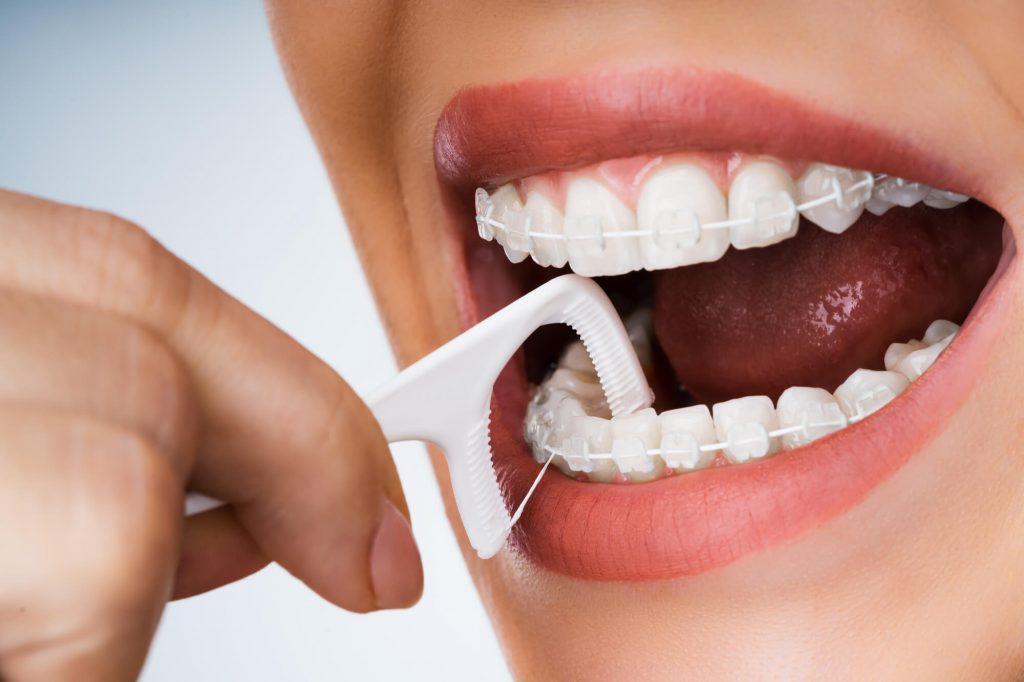
a woman with braces flossing teeth as instructed by her Dentist in midtown Manhattan

Every single dentist in Midtown Manhattan will disagree that flossing while wearing braces is impossible. The truth is, with practice, it will quickly become second nature and a natural extension of brushing your teeth.  

a woman with braces flossing teeth as instructed by a Dentist in midtown Manhattan

Why Floss?  

Affects Oral Health 

You may be perplexed about how a simple piece of floss can significantly affect your oral health. Flossing is surprisingly effective. No toothbrush, no matter how good or expensive it is, can get into all the nooks and crannies like floss can. 

Both practices remove food and bacteria from your teeth, which can cause cavities and discoloration. It also aids in the prevention of gingivitis and other oral health issues that can develop later in life. You can brush twice a day and floss once daily. 

How to Floss While Wearing Braces 

Flossing with braces can indeed be challenging at first. However, with perseverance, you’ll get the hang of it. You’ll be a pro in no time! Although flossing takes time, every dentist you’ll ask will say it’s worth the hassle! 

Follow Our Instructions 

  1. Brush your teeth to eliminate plaque, bacteria, and food particles. Make sure your toothbrush reaches all of your teeth’s surfaces – outer, inner, and flat surfaces of your top and bottom arch. 

  1. Wrap the ends of a 20-centimeter piece of floss around your index finger to form a tight grasp.  

  1. Thread the floss between the wire and your teeth, aligning it with the gap between your teeth. To remove any food particles or plaque build-up, slide the floss between the teeth, down the vertical edges of each tooth, and into the movable gum tissue. 

  1. After flossing each tooth, wrap the old floss around your finger to avoid reintroducing bacteria into your mouth. 

  1. Continue with the next tooth and repeat the procedure. 

Available Products for Flossing Teeth 

Not only is wax floss available on the market, but there are a few other options for cleaning your interdental region. Experiment with both to find which one you prefer. 

 Floss Threader 

You could use a floss threader to make cleaning around your braces simpler. The threader makes it easier to get past the wire and between the teeth. Parents may need to assist their children when flossing until they can do so independently. 

 Toothbrushes With Small Bristles 

Small bristles on interdental brushes make it easy to clean between teeth and remove food and plaque. Place the brush between your teeth and gently brush back and forth a few times to remove any food particles. Interdental brushes are only meant to be used with water. Toothpaste can be excessively abrasive. 

They come in various widths to fit the size of the gaps between your teeth. The best thing about interdental brushes is that they last anywhere from three days to three weeks before needing to be replaced. 

Interdental brushes are less aggressive on the gums than floss since they do not cut into the gums as floss does. The bristles on the brush may also be more effective in removing bacteria from the spaces and gaps than dental floss. 

Water Flosser 

To eliminate food, this type of floss sprays water between the teeth. Water flossers are also useful for cleaning around cables and brackets. However, this is rarely practiced because your toothbrush and floss will suffice. 

a Dentist in midtown Manhattan checks a patient's braces

Where to Find a Good Dentist in Midtown Manhattan 

At Coliseum Dental, we have experienced dentists who will cater to your dental needs. Don’t hesitate to reach us