How Are Laser Treatments Performed?

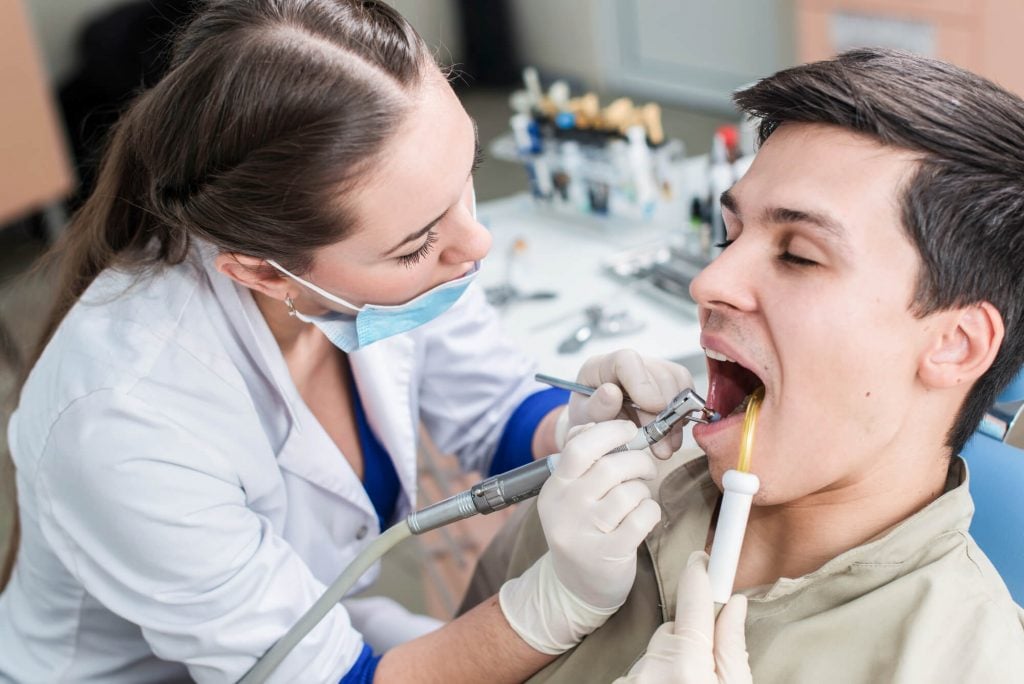
Doctor performing Laser Dentistry in midtown Manhattan on a patient 

Drilling and long-numbing needles are the most feared aspects of dental work. The good news is that there are superior alternatives. Thanks to laser dentistry in Midtown Manhattan, cavities and other oral health issues can be treated naturally without using dental drills or hazardous chemicals.   

Your dentist can perform a variety of day-to-day dental operations using lasers. Dentists can preserve more of your natural tooth structure and gum tissue with laser treatments. In contrast to conventional therapies, most of these procedures are performed without anesthesia.  

Patient getting treated with Laser Dentistry in midtown Manhattan 

Expectations, Benefits, and Drawbacks of Laser Dentistry

What to Expect

Most laser dentistry procedures resemble their related dental procedures quite closely. For instance, if your dentist is utilizing a dental laser to fill a cavity, they would follow the same steps as they would for a conventional filling, but instead of using a drill, they will use a laser to remove tooth rot.   

Depending on the operation, your dentist may need to provide anesthesia to numb your mouth. For instance, deeper cavities require numbing shots, while very shallow cavities may not.   

After preparing your mouth, your dentist will use a laser to complete the procedure. They will utilize the laser to remove tooth decay in cases of cavities. You may also hear popping sounds when the laser vaporizes the tooth-decaying areas.  

Likewise, your dentist will fill the cavity after removing the decayed tooth, the same as they would if they were using a dental drill. However, dentists frequently need to shape and polish the composite with a drill, even with laser operations.   

Compared to the identical procedure performed using conventional methods, most patients report less pain following laser dental procedures. The nerves in your mouth can heal more quickly with laser treatments, hastening the process of returning things to normal.  


What Are the Benefits?

What advantages can laser dentistry offer? Among the benefits of laser dentistry are the following:  

  • No Sutures Are Required – Sutures are needed for several dental treatments, like soft tissue biopsies, when done by conventional means. There is no need for sutures when dentists or oral surgeons perform these operations with a laser.  
  • Early Dental Problem Identification – Lasers can identify cavities, germs, and other dental issues earlier than other techniques. For instance, this method can frequently recognize dental decay before it is visible on an x-ray or during a standard checkup.  
  • Leaving Healthy Tissues Intact – Dental drills for cavity treatments remove some good tooth tissue. You can maintain more of your natural tooth because laser treatments only remove the decaying tooth portions.  
  • Less Bleeding and Pain – Dental lasers cut through soft tissue by enclosing blood vessels and nerve endings, minimizing bleeding and post-operative discomfort.  
  • A Quicker Recovery Period – Dental surgeries performed with laser technology heal faster than those achieved with conventional methods.  


What Are the Drawbacks?

Some laser dental procedures require an anesthetic. In specific scenarios, numbing shots might still be necessary. It’s also important to remember that teeth with fillings or other dental treatments cannot be treated with laser dentistry. Additionally, lasers cannot be used on dentures or dental implants.  

What Distinguishes a Laser Procedure from a Conventional Filling?  

The method used to remove the decayed tooth tissue—a dental drill or a laser from the dentist—distinguishes laser treatment from a conventional filling. Less healthy tooth tissue is also removed during laser procedures. 

Person smiling while getting Laser Dentistry treatment in midtown Manhattan 

Is Laser Dentistry in Midtown Manhattan Worth It?   

In many aspects, laser dentistry can be superior to conventional techniques. Compared to traditional dental surgery, it’s typically less painful, doesn’t harm tissues as much, and most patients recover more quickly. Please schedule an appointment with us to learn more about laser dentistry.

What Is Gum Bleaching?

Patient after gum bleaching procedure Gramercy park
The first thing that springs to mind when people jump into the topic of what makes a beautiful and healthy smile is pearly white teeth. What’s often left out of the conversation are the gums. They are the unsung heroes of your mouth because a beautiful smile is impossible to achieve without them. You can accomplish beautiful smiles and gums with quality gum bleaching in Gramercy Park.   Gums that are discolored might affect the appearance of your smile and lower your self-esteem. If your gums make you hesitant to flash your smile, you should think about gum bleaching, otherwise known as gum whitening or gum depigmentation.   Gum bleaching diagram Gramercy park

All About Gum Bleaching

What Is It?

This procedure is called many names, such as gum whitening, gum lightening, dark gum treatment, and gum depigmentation. But, no matter what it’s called, the vital fact to remember is that this is a quick and comparatively painless one that’ll give you results worth every penny.   A soft tissue laser is used during the operation. When your gum tissue’s brown or black spots are exposed to the laser, they will disappear. Although many patients undergo this procedure to lighten their black gums, some still do so to have evenly pink gums across their mouths.  

Is Gum Bleaching Painful?

As stated earlier, gum lightening is comparatively painless. You won’t feel much pain throughout the non-invasive gum bleaching technique. Even though you may experience minor soreness, it’s only natural as your gums need to adjust. Soon after the surgery, you can experience transient gum sensitivity.  

What Should I Do if I Have Black Gums?

You may have black, bright red, or patchwork gums for various causes. Discoloration may be brought on by:  
  • A lack of care and poor dental hygiene – The best way to enhance oral health, lower the chance of illness, and avoid staining is to brush your teeth twice a day and floss afterward.  
  • Medication – Some medications are linked to gum discoloration. Patches of dark gum pigmentation can be targeted with gum bleaching or whitening, although discoloration may return if you keep taking the same medications after treatment. 
  • Lifestyle choices: Smoking and chewing tobacco are common factors that increase your risk of developing stained gums. 
  • Ethnicity: Some people are more prone than others to have darker or patchier gums because of their race.  

Is Gum Bleaching Safe?  

The gum bleaching procedure is non-invasive and safe. The black tissue on the surface of your mouth is softly removed using a microdermabrasion procedure or laser technology while you are sedated. Aside from the fact that it’s a safe procedure, another good thing about this treatment is that the outcome can be achieved on the same day.  

Are There Negative Effects?

Your gums will notice the effects of gum bleaching immediately, and there won’t be any adverse side effects. After the bleaching operation, you may experience temporary mild sensitivity but no severe pain or discomfort. Following gum whitening, patients can immediately eat and speak normally.  

How Long Does the Gum-Whitening Procedure Last?

It takes about 45 minutes to bleach your gums. However, depending on the local anesthetic, you may have to wait a little while before the treatment begins. Dark gums may usually be removed in less than an hour, though.   Woman smiling after gum bleaching procedure Gramercy park

How Long Do the Results of Gum Bleaching in Gramercy Park Last?  

The gum bleaching process takes less than an hour. However, the consequences of the operation linger quite a while, especially for situations brought on by external factors like smoking.    Although some gums will retain their beautiful pink shade for 20–25 years, the results are typically long-lasting. Indeed, this treatment allows you to enjoy your pink gums that appear healthy for the rest of your life. Please schedule an appointment with us to get this treatment. 

Are There Restrictions on Getting Teeth Whitening?

Restrictions on getting teeth whitening

Are you interested in teeth whitening? The inside information is right here. Discover the different alternatives to cosmetic dentistry in Murray Hill. In this article, you’ll learn how teeth whitening works, the process used to whiten teeth effectively, and if anyone can get their teeth whitened. 

Woman after cosmetic dentistry Murray Hill

Teeth Whitening Q and A’s

Who Makes the Best Teeth Whitening Candidates?

Suitable candidates for professional teeth whitening are those with healthy gums and teeth free of fillings or other restorations. Patients who have yellow teeth are more likely to benefit from treatment. 

Do All Teeth Whitening Procedures Work? 

Unfortunately, not everyone can benefit from whitening. For instance, whitening usually helps with yellow discoloration. However, over-the-counter whitening treatments may not effectively work on teeth with brown or gray tones. 

Additionally, whitening won’t help if the discoloration is brought on by medications or an accident. Finally, patients with dental caps, veneers, crowns, and fillings are not good candidates for tooth whitening. 

What Teeth Whitening Options Do I Have?

If you want to whiten your teeth, you have a variety of options to choose from. 

  • In-Office Teeth Whitening 

The most pleasing results come from professional in-office whitening, which often whitens teeth by around eight shades. Professional teeth whitening is more expensive than other options, but the benefits are more noticeable and immediate. This process is also safer than bleaching at home because the whitening is done by a professional. 

  • At-Home 

This includes whitening toothpaste, teeth-whitening strips, and whitening-solution-filled mouth trays. All of these at-home bleaching techniques have benefits, but they also have some downsides.  

One drawback is that it takes time to see results, and those effects are less dramatic than those you may get from professional whitening. Additionally, those with sensitive gums or teeth shouldn’t use these techniques because they will only create more harm than good. 

  • Bleaching Toothpaste 

Chemicals are used in whitening toothpaste to brighten teeth. However, these toothpastes usually brighten teeth by a shade or two. Hence, the most subtle outcomes are provided by this type. 

What Causes Yellow Teeth?

There are several reasons why people get yellow teeth. The most frequent causes are: 

  • Early tetracycline antibiotic exposure 
  • Excessive fluoride intake  
  • Inadequate dental care 
  • Aging 
  • Trauma 
  • Drinking dark beverages like red wine, tea, coffee, and cola 
  • Smoking 

Most people don’t think about how becoming older changes the shade of their teeth. The enamel makes up the outer layer of your teeth. Dentin, a yellow tissue layer, lies beneath it. Studies show that enamel starts to erode with age. When this occurs, the dentin peeks through, and the teeth seem yellow.

What Are the Obstacles to Effective Teeth Whitening?

Special considerations are required if your mouth contains fillings or other materials. Your natural teeth and inorganic restorations may not match after tooth whitening since crowns, bridges, and other inorganic restorations are resistant to the effects of the process.  

If inconsistent color is going to be an issue, your dentist may be able to devise a plan to provide more reliable results. New fillings or other repairs can be necessary for specific circumstances. Even if teeth whitening is not an option, your dentist can still help you achieve the perfect smile with veneers or bonding. 

Patient receiving cosmetic dentistry Murray Hill

Know More About Cosmetic Dentistry in Murray Hill

Since teeth tend to be yellow with age, very few people have naturally white teeth. However, good oral hygiene and routine dental exams can help keep the teeth white. 

Although yellow teeth are not usually a symptom of health issues, a dentist can check for tooth decay and enamel loss. If you want to arrange professional teeth whitening or other treatments, please schedule your dental appointment. 

The Perfect Age for Receiving Anesthesia or Sedation

kid undergoes sedation dentistry Gramercy park

Treatment for young children with infection or oral pain is necessary at any age, which may include sedation or general anesthesia. Some oral treatment requires that your child remain perfectly quiet and steady. This is true especially when there may be a lot of work to be done. 

There are plenty of patients young and old who can benefit from sedation dentistry in Gramercy Park. Let’s find out how. 

patient under treatment and sedation dentistry Gramercy park

Are There Any Risks in Using Sedation or Anesthesia at an Early Age?  

According to the 2019 dental anesthetic guidelines, the American Academy of Pediatric Dentistry (AAPD) and American Academy of Pediatrics (AAP) have updated the current recommendations for oral surgeons and other professional dentists. 

The guidelines provide that there must always be at least two people in the room with advanced life support training available in the event of an emergency. There will be one oral surgeon or dental professional who will be in charge of the procedure, while the other will be a third-party observer.  

Equally important is the presence of a dental anesthetist, second oral surgeon, registered or certified nurse anesthetist, or a physician anesthetist. In this way, the risks, although very little, can be prevented. 

What Are the Different Types of Sedation?  

General Anesthesia  

A general anesthetic means that your child will be entirely unconscious and free of pain during the procedure. While an oral surgeon or separate dentist completes the dental operation or surgery, anesthesia professionals (those mentioned above) will administer the sedative and monitor your kid. Dental offices, ambulatory surgery centers (ASCs), and hospitals can all administer anesthesia.  

To ensure that your child’s treatment goes as smoothly as possible, they can receive intravenous (IV) sedatives. However, despite the fact that your child may still be able to make noises and move, their breathing may sometimes be interrupted.  

Your child’s vital signs must be constantly monitored by an anesthesiologist or another competent expert (independent observer), such as a nurse or paramedic, throughout the surgery as well as when your child wakes up. Also, they are the ones who will be able to tell you when your child is ready to head home. 

Moderate Sedation 

Under this type of sedation, children are drowsier, but they are still able to follow instructions from the oral surgeon or dental professional. Moderate sedation is preferable for older children and adolescents and not for younger or more nervous youngsters. The latter are self-sustaining and quickly awoken.  

In most cases, the operation will be forgotten by children. In the course of performing dental procedures, dentists and oral surgeons can safely administer these drugs. 

Laughing Gas 

Nitrous oxide is the least intrusive and mildest sedative available. “Laughing gas” is a common term for it.  Even if you don’t fall asleep, most people will feel more at ease. Most people will feel goofy and lightheaded. 

Know More About Sedation Dentistry in Gramercy Park 

An adolescent or adult may benefit from sedation.  As long as your child is quiet and alert, the dentist or surgeon can usually get what they need from them. If you have any questions, see us today