How to Floss When You Have Braces

a woman with braces flossing teeth as instructed by her Dentist in midtown Manhattan

Every single dentist in Midtown Manhattan will disagree that flossing while wearing braces is impossible. The truth is, with practice, it will quickly become second nature and a natural extension of brushing your teeth.  
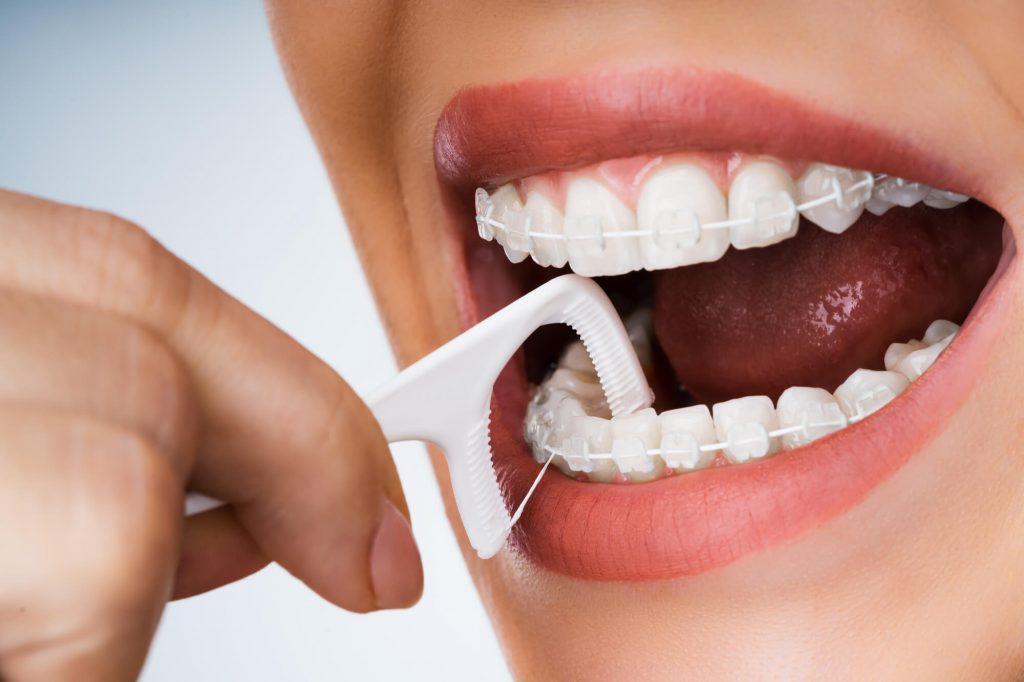
a woman with braces flossing teeth as instructed by a Dentist in midtown Manhattan

Why Floss?  

Affects Oral Health 

You may be perplexed about how a simple piece of floss can significantly affect your oral health. Flossing is surprisingly effective. No toothbrush, no matter how good or expensive it is, can get into all the nooks and crannies like floss can. 

Both practices remove food and bacteria from your teeth, which can cause cavities and discoloration. It also aids in the prevention of gingivitis and other oral health issues that can develop later in life. You can brush twice a day and floss once daily. 

How to Floss While Wearing Braces 

Flossing with braces can indeed be challenging at first. However, with perseverance, you’ll get the hang of it. You’ll be a pro in no time! Although flossing takes time, every dentist you’ll ask will say it’s worth the hassle! 

Follow Our Instructions 

  1. Brush your teeth to eliminate plaque, bacteria, and food particles. Make sure your toothbrush reaches all of your teeth’s surfaces – outer, inner, and flat surfaces of your top and bottom arch. 

  1. Wrap the ends of a 20-centimeter piece of floss around your index finger to form a tight grasp.  

  1. Thread the floss between the wire and your teeth, aligning it with the gap between your teeth. To remove any food particles or plaque build-up, slide the floss between the teeth, down the vertical edges of each tooth, and into the movable gum tissue. 

  1. After flossing each tooth, wrap the old floss around your finger to avoid reintroducing bacteria into your mouth. 

  1. Continue with the next tooth and repeat the procedure. 

Available Products for Flossing Teeth 

Not only is wax floss available on the market, but there are a few other options for cleaning your interdental region. Experiment with both to find which one you prefer. 

 Floss Threader 

You could use a floss threader to make cleaning around your braces simpler. The threader makes it easier to get past the wire and between the teeth. Parents may need to assist their children when flossing until they can do so independently. 

 Toothbrushes With Small Bristles 

Small bristles on interdental brushes make it easy to clean between teeth and remove food and plaque. Place the brush between your teeth and gently brush back and forth a few times to remove any food particles. Interdental brushes are only meant to be used with water. Toothpaste can be excessively abrasive. 

They come in various widths to fit the size of the gaps between your teeth. The best thing about interdental brushes is that they last anywhere from three days to three weeks before needing to be replaced. 

Interdental brushes are less aggressive on the gums than floss since they do not cut into the gums as floss does. The bristles on the brush may also be more effective in removing bacteria from the spaces and gaps than dental floss. 

Water Flosser 

To eliminate food, this type of floss sprays water between the teeth. Water flossers are also useful for cleaning around cables and brackets. However, this is rarely practiced because your toothbrush and floss will suffice. 

a Dentist in midtown Manhattan checks a patient's braces

Where to Find a Good Dentist in Midtown Manhattan 

At Coliseum Dental, we have experienced dentists who will cater to your dental needs. Don’t hesitate to reach us

Correct Intrinsic and Extrinsic Stains

laser teeth whitening as part of cosmetic dentistry in Midtown Manhattan

The existence of bright, ivory teeth in a stunning smile cannot be overstated. You may notice that your smile isn’t as bright as it should be because your teeth are discolored and dull. Based on experts specialized in cosmetic dentistry in Midtown Manhattan, healthy living and diet are factors that influence the shade of your teeth.  

With up-to-date dental advancements, you don’t have to live with discolored or stained teeth anymore. To brighten your teeth and enhance your smile, dental professionals offer veneers and teeth-bleaching procedures.  

white teeth due to cosmetic dentistry in Midtown Manhattan

Get Ivory-Looking Teeth 

Intrinsic Teeth Stains 

Teeth stains beneath the surface of the enamel cause this type of dental discoloration. But there are instances when extrinsic stains are caused by particles or pigments that break through the layer of your tooth’s enamel. Intrinsic stains can also be caused by:  

  • Trauma or dental injury    
  • Certain medications  
  • Excessive fluoride use  

Dental stains like this are more difficult to remove than external stains. Brushing and cleaning are never enough to eradicate them totally. If you have intrinsic teeth stains, you should visit a dental professional for treatment. Teeth whitening, whether done at home or in the office, as well as other procedures like veneers, may also be a good solution.  

Extrinsic Stains  

The most prevalent kind of teeth stain is extrinsic stain, which is often called surface discoloration. Extrinsic stains are formed by whatever you put in your mouth that stains the teeth’s outer enamel. These may be due to the following: 

  • Tobacco products (smoking or chewing) 
  • Tomato Sauce  
  • Curry 
  • Balsamic vinegar 
  • Deep-hue berries (blueberries, cranberries, raspberries, blackberries) 
  • Red wine 
  • Dark soda 
  • Tea 
  • Coffee  

Treatment of Intrinsic Stains 

When it comes to intrinsic stains, teeth whitening techniques generally fall short. As a result, treating intrinsic stains can be time-consuming and more complex. Chronic pigmentation remedies are typically beneficial to patients with inherent discoloration.  

Treatment of Extrinsic Stains 

Another solution is veneers. They can be used to repair missing or cracked enamel that has been poorly stained. Depending on the extent of tooth decay, the damaged tooth structure must be cleansed and then replaced with a porcelain crown, porcelain veneer, or dental filling. Some individuals with chronic tooth decay or significant tooth injuries will require dental implants to achieve the smile you desire.  

Extrinsic stains cause tooth discoloration that can be efficiently remedied with teeth whitening treatments. The standard method of teeth whitening used is tray bleaching. You put on form-fitting trays filled with a bleaching liquid for two to six hours per day for two weeks. Most cosmetic dentists recommend in-office teeth whitening for individuals who want to whiten their teeth quickly and effectively.   

Dental Veneers 

These are thin shells of porcelain that cover the front. Dental veneers are a fantastic option for those who have stains those whitening treatments can’t remove or who have additional dental flaws that need to be addressed. These tooth-colored porcelain shells fully cover the front of your teeth, hiding the stains and other concerns such as gaps, chips, and cracks.  

before and after comparison of teeth cosmetic dentistry in Midtown Manhattan

Other Treatments Included in Cosmetic Dentistry in Midtown Manhattan 

Cosmetic dentistry includes dental implants, fillings, and veneers. All of these are effective treatments for brightening your smile. If you want a whiter, brighter smile, call or book online with our friendly office attendants at Coliseum Dental to make an appointment. 

Types of Laser Dentistry

patient smiles after laser dentistry in Midtown Manhattan

Dentists are constantly searching for better ways to care for their patient’s oral health. Laser dentistry in Midtown Manhattan is one method used to accomplish this.  

Although lasers have been used in the dental world since the early 1990s, they have been enhanced and improved to handle an increasing number of issues and provide remarkable smile benefits. There are two types of laser dentistry: hard tissue and soft tissue applications.  

A diode or YAG laser can treat periodontal disease more effectively for soft tissue problems. Carbon dioxide lasers, for instance, can safely and quickly remove diseased tissue while preserving healthy tissue. Blood vessels and nerves can be targeted by this laser as well.

Dentist explains the process of laser dentistry in Midtown Manhattan

Hard and Soft Tissue Laser Dentistry Applications 

Soft Tissue Applications 

If a patient has any anxiety about treatment, laser therapy may be appealing to them. Almost everyone who receives laser therapy has less discomfort, gingival swelling, and post-operative pain as a result of their treatment. Likewise, hemostasis eliminates the need for sutures.  

While electrosurgery may be faster on occasion, laser treatment seems to be more comfortable and less traumatic for patients. It can be comforting to know that their dentist employs an advanced approach to oral care. Additionally, infants and children who would otherwise require a general anesthetic can now undergo surgery thanks to advances in soft tissue treatment. 

Examples of soft tissue uses include:  

  • Removing tissue to treat sleep apnea   
  • Reshaping gummy smiles  
  • Eliminating benign tumors  
  • Addressing cold sores  
  • Repairing congenital abnormalities and soft tissue defects  
  • Crown lengthening  

For individuals with gum disease, soft tissue laser dentistry can be a lifesaver. Therapeutic treatments use a thin fiber to deliver ultrasonic energy to treat deep pockets in the gums. Chromophores, melanin, and hemoglobin found in gum disease effectively absorb the laser’s energy, so the treatment is directed at those areas that are unhealthy.  

To reduce the inflammatory response and eliminate irritants from the root surfaces of teeth, non-surgical treatment typically entails scaling and root canal therapy. When combined with laser therapy, scaling and root planing improves treatment results even further. 

Hard Tissue Applications 

A hard-tissue laser’s ability to accurately cut through enamel makes it an excellent choice for the exact removal of bone and teeth. From preparing teeth for dental crowns to correcting old fillings, this includes all aspects of dentistry.  

The following are some possible uses for hard tissue lasers:  

  • Teeth whitening   
  • Treating tooth sensitivity (to seal the roots of the tooth)  
  • Tooth preparation for crowns and fillings  
  • Removing and detecting cavities  
dentist checks patient's mouth before laser dentistry in Midtown Manhattan

Advantages of Laser Dentistry in Midtown Manhattan 

Most general dentists have decided to use laser dentistry because it gives several distinct advantages over more conventional methods. Every time a patient is treated, dentists want to make them feel as comfortable as possible. Some of the benefits of laser dentistry are as follows:  

  • Less likely to need stitches with laser treatment  
  • Lasers are highly precise, so less healthy tissue has to be removed  
  • Lasers are sterile, which means there is a lower chance of an infection  
  • Anesthesia may not be necessary  
  • Less pain  
  • Less post-surgical bleeding  
  • Faster healing times  


Laser dentistry is available in Coliseum Dental. Do you have any questions? Would you like to meet with us to discuss other products and services? Please call our customer service representative right away so we can help you get your teeth back in shape. 

Dental Gimmicks You Should Never Try

DIY beauty hacks have evolved into a lifestyle throughout the past few months of quarantine. We had to become our own makeup artists, aestheticians, hairstylists, and dentists in Kips Bay, doing everything from clipping our bangs and dyeing our roots to combing our brows and painting our nails. This stay-at-home mentality has leaked into dentistry too. 

Dentist in Kips Bay removes plaque

TikTok Dental Hacks You Need to Avoid 

Make Your Own Braces 

Braces are costly, so it’s not surprising that inventive minds have attempted to duplicate the technique. A YouTube search for “gap bands” reveals people binding pairs of teeth along with rubber bands to draw them closer together and narrow the gap. When it comes to DIY braces, the stakes are considerably higher than when it comes to the outcome. 

The state of your teeth, bone, and gums must all be considered when teeth are shifted. Straightening your teeth without treating all of these concerns could result in a lot of unnecessary discomfort and, in the worst-case situation, tooth loss. 

Remove the Plaque at Home 

Plaque scrapers are definitely available at your grocery or local drug store, but the majority of dentists advise against using them. It takes specific training to be able to scrape tartar and plaque off your teeth without hurting your gums. Moreover, hygienists and dentists must go through years of training to learn how to do it safely. If used incorrectly, these tools can quickly cause recession and gum damage because of their sharpness.   

Bleach With Raw Hydrogen Peroxide   

Some dentists say that acidic fruits, oil pulling, and activated charcoal are a hoax. They are among the strange tricks and chemicals used in the hunt for pearly teeth. Whitening treatments are more widely available than ever before, but product claims should be taken carefully. 

Hydrogen peroxide is a carcinogenic. So, it can really be dangerous when used unsupervised. Just a simple contact with soft tissue will create damage to your dental health. Likewise, ingestion should be avoided. 

While bleaching at home can cause significant enamel damage and gum recession, direct application to teeth with properly fitting trays or in a controlled manner lessens this impact.  

Remove a Tooth 

Pulling your own teeth, unless it’s a baby tooth, will cause you more harm than good. This practice may have been common in the 90’s, but it’s only done on baby teeth. Removing teeth without training or professional supervision can result in cavitation. It is an infection within a hole in the bone where the tooth used to be.  

A dentist has the sterile instruments needed to enter and thoroughly clean the affected area. Self-extraction without enough training might result in root cracking before it’s completely out. Infection and the need for a surgical operation to correct it will soon occur. 

File your Teeth 

While it may appear that filing a chipped tooth with a nail file is harmless, attempting to smooth rough edges on your own has implications. Enamel can be removed if you don’t know what you’re doing. Once this happens, discoloration of your teeth and susceptibility to stains can occur.  

Looking for a Dentist in Kips Bay 

Doing dentistry without the supervision of a dentist can lead to persistent sensitivity and expose your dental health to infection. Contact Coliseum Dental to know how to take care of your teeth!